- Home
- Products
- Why Choose Us
- About Us
- News
- Blog
- Contact Us
leave a message
Choosing the right deburring tool can change the finish, speed, and safety of daily production work. This guide examines Cs Unitec Brush Deburring Tools for global buyers planning purchases in 2026. It focuses on practical performance, not attractive catalog language.
The review considers brush material, wire diameter, trim length, mounting style, and operating speed. These details matter when removing burrs from steel edges, aluminum castings, welded joints, or threaded parts. A brush that feels aggressive on carbon steel may mark softer aluminum. A fine wire brush may leave a cleaner surface but require more passes. Small differences matter.
We compare product suitability through manufacturer specifications, application guidance, and real workshop conditions. The analysis also considers tool compatibility, operator control, replacement needs, packaging, and after-sales support. Buyers should verify current specifications before ordering, because models and regional availability can change. That part is easy to overlook.
No single brush fits every factory. Surface geometry, production volume, and desired finish can alter the best choice. Even experienced users may misjudge performance when testing only one material. A short trial on actual parts remains valuable. This guide therefore presents strengths, limitations, and reasonable selection questions rather than promising universal results. It is designed to help distributors, maintenance teams, and industrial purchasers make informed decisions with clearer expectations.
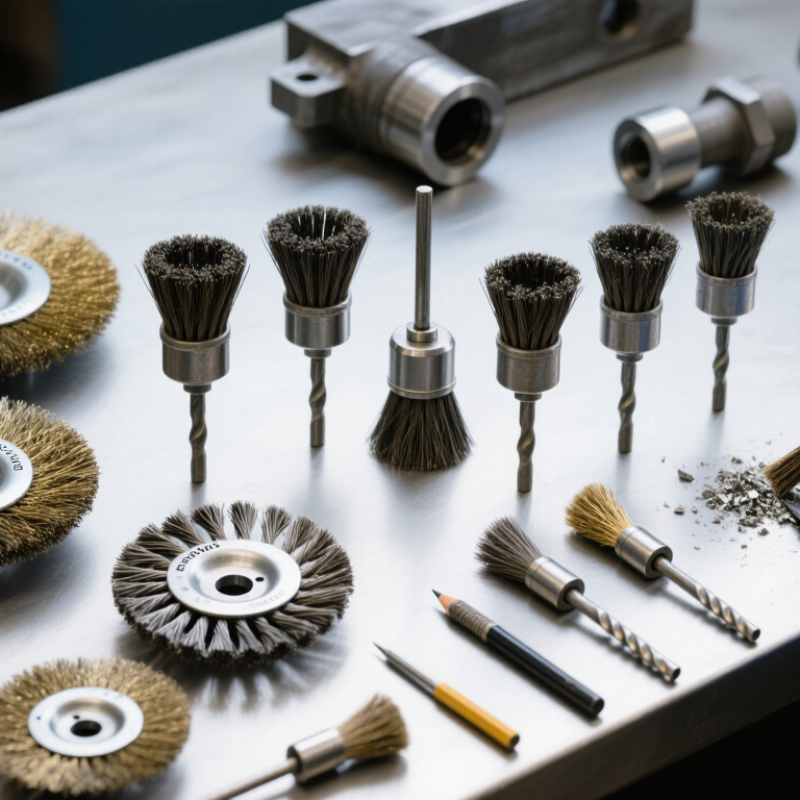
Industrial deburring brushes in 2026 are available in wheel, cup, end, and tube designs. Each shape suits a different working area. Wheel brushes cover straight edges quickly, while cup brushes reach broad flat surfaces. End brushes clean holes, corners, and narrow channels. Tube brushes work inside pipes and drilled passages.
Material selection affects both finish and service life. Carbon steel removes heavy burrs from mild steel. Stainless steel helps avoid iron transfer on stainless components. Brass is gentler on softer metals and painted surfaces. Abrasive nylon produces a controlled finish on aluminum, plastics, and composites. It also creates less aggressive cutting action. That can matter near precision edges.
Typical 2026 specifications include brush diameters from about 10 to 200 millimeters, various trim lengths, and shanks suited to drills, grinders, or automated cells. Speed ratings must match the tool, wire type, and brush diameter. Never choose by diameter alone. In practical trials, a shorter trim often feels more stable, but it may remove less material. I still see buyers selecting the highest RPM without testing workpiece heat or surface marks. That approach is easy, but incomplete. Buyers should verify arbor size, filament density, working angle, packaging, and replacement availability. Consistent batch quality matters when many factories share one process. Test samples first. Small differences can change the final edge.
Technical comparison of commonly used industrial brush deburring configurations for manual, portable, and automated applications
| Tool Type | Typical Brush Diameter | Filament Material | Recommended Workpiece Materials | Common Shank or Mounting | Typical Operating Speed | Primary Deburring Application | Key Selection Considerations |
|---|---|---|---|---|---|---|---|
| Wheel Brush | 50–200 mm | Carbon steel, stainless steel, brass-coated steel, or abrasive nylon | Carbon steel, stainless steel, aluminum, copper alloys, and plastics | 15.9–25.4 mm bore; arbor-mounted or guarded machine-mounted | 1,500–6,000 rpm, depending on diameter and construction | Removing burrs from flat edges, cut profiles, sheet-metal parts, and weld-preparation surfaces | Choose a larger diameter for broad surfaces and a softer filament for thin or easily scratched parts |
| End Brush | 10–50 mm brush face | Crimped carbon steel, stainless steel, or abrasive nylon | Steel, cast iron, aluminum, brass, and engineering plastics | 6 mm or 1/4 in shank; compatible with drills, die grinders, and machining centers | 3,000–15,000 rpm | Internal corners, slots, grooves, holes, and localized edge treatment | Use a narrow face for restricted areas; avoid excessive side loading on small-diameter shanks |
| Tube Brush | 3–80 mm overall brush diameter | Nylon, stainless steel, brass, or abrasive nylon | Aluminum tubing, stainless tubing, hydraulic components, polymer parts, and small bores | Looped wire handle, twisted-wire stem, or flexible shaft | Manual use to approximately 3,000 rpm when machine-rated | Internal bore cleaning, cross-hole deburring, thread cleaning, and removal of loose machining residue | Match brush diameter to the bore; a light interference fit improves contact without jamming |
| Cup Brush | 50–125 mm cup diameter | Crimped steel, stainless steel, or abrasive nylon | Steel, cast iron, stainless steel, and coated metal surfaces | M14 or M10 threaded hub, or arbor-mounted configuration | 3,000–12,500 rpm, subject to rated maximum speed | External edges, corners, weld spatter, oxide removal, and surface preparation | Suitable for hand-held angle grinders; maintain a stable angle and use a compatible guard |
| Abrasive Nylon Wheel Brush | 75–250 mm | Silicon-carbide or aluminum-oxide abrasive nylon filaments | Aluminum, stainless steel, brass, wood, composites, and coated surfaces | Arbor-mounted or machine spindle-mounted | 1,000–5,000 rpm | Controlled edge blending, light deburring, finishing, and removal of machining marks | Produces a more consistent finish than aggressive wire; select grit according to the required surface quality |
| Twist-Knot Wheel Brush | 75–150 mm | Hardened carbon steel or stainless-steel wire | Carbon steel, cast iron, heavy weldments, and robust fabricated parts | 22.2 mm bore or threaded arbor, depending on tool system | 3,000–8,500 rpm | Heavy burr removal, weld cleaning, scale removal, and aggressive edge preparation | High cutting action requires firm workholding, suitable guarding, and careful control of contact pressure |
| Disc Brush | 100–300 mm outer diameter | Nylon abrasive filament, stainless steel, or carbon steel | Aluminum, steel, stainless steel, plastics, and formed sheet components | Arbor, keyed hub, or automated spindle interface | 500–4,000 rpm | High-volume edge deburring on flat, stamped, laser-cut, or punched components | Well suited to automated lines; use controlled feed rates to maintain uniform contact and tool life |
| Honing and Cross-Hole Brush | 4–100 mm nominal bore range | Silicon-carbide, aluminum-oxide, ceramic, or nylon abrasive filaments | Aluminum, steel, cast iron, stainless steel, and non-ferrous precision components | Flexible stem, spindle adaptor, or automated tool holder | 500–3,000 rpm with axial reciprocation where specified | Cross-hole intersections, hydraulic passages, fuel-system parts, and controlled internal edge radiusing | Verify bore tolerance, abrasive grade, stroke length, and flushing method before production use |
| Hand Scratch Brush | 20–60 mm brush width | Carbon steel, stainless steel, brass, or nylon | General steelwork, stainless steel, aluminum, plastics, and painted surfaces | Ergonomic hand-grip handle | Manual operation | Light burr removal, cleaning, thread brushing, and finishing of accessible edges | Best for low-volume work and delicate areas; brass or nylon reduces the risk of scratching softer materials |
| Flexible Shaft Brush | 10–75 mm brush diameter | Nylon, abrasive nylon, carbon steel, or stainless steel | Machined housings, castings, tubes, and parts with difficult internal access | Flexible-shaft coupler or rotary handpiece connection | 1,000–10,000 rpm, according to shaft and brush rating | Internal passages, deep recesses, curved surfaces, and remote deburring locations | Check minimum bend radius and shaft compatibility; excessive bending can reduce control and service life |
Specification note: Operating speeds are typical application ranges rather than universal limits. Always follow the marked maximum speed of the brush, spindle, grinder, or machine, use the correct guard and personal protective equipment, and test the selected filament on a sample workpiece before production.