Why Choose an Automated Polishing Machine for Your Business Needs?
In today's competitive landscape, businesses are constantly seeking ways to enhance efficiency and output quality. An "Automated Polishing Machine" offers an effective solution. Experts like Jack Thompson, a leader in manufacturing technology, emphasize the significance of automation. He states, “Investing in an Automated Polishing Machine can transform your production line.”
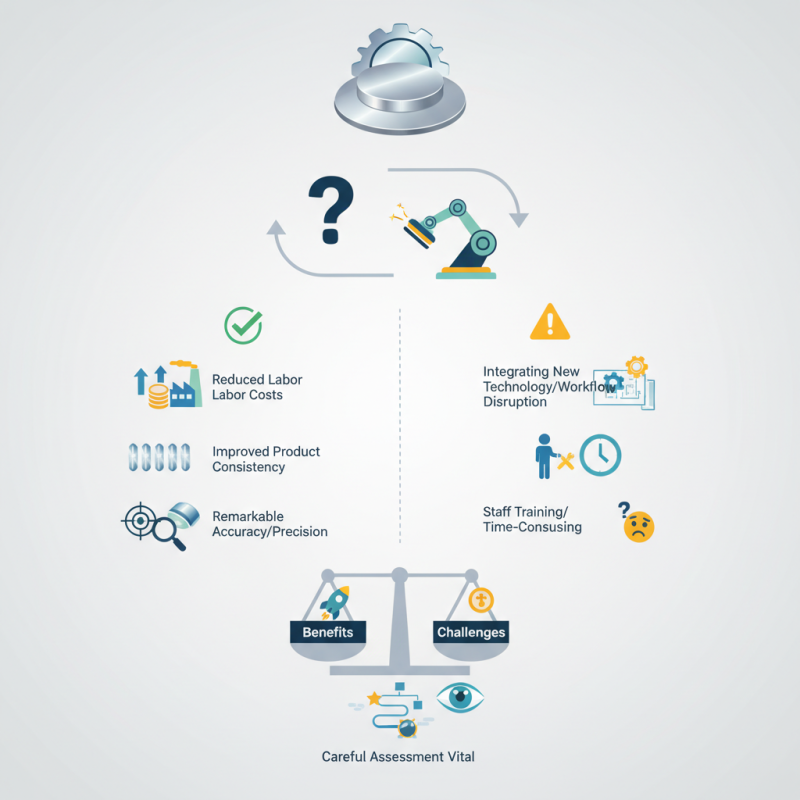
The adoption of such machines reduces labor costs while improving product consistency. Precision is key in polishing, and automation achieves this with remarkable accuracy. However, not every machine is suitable for every business. Companies must consider their specific needs before investing.
Challenges remain. Integrating new technology can disrupt existing workflows. Training staff on automated systems is essential yet time-consuming. Thus, while the benefits are substantial, businesses should approach with caution. The right choice can propel them forward, but careful assessment is vital.
Advantages of Automated Polishing Machines in Industrial Applications
Automated polishing machines bring numerous advantages to industrial applications. They enhance efficiency by performing repetitive tasks faster than manual methods. This reduces production time and allows businesses to focus on core activities. Moreover, these machines ensure a consistent finish that is often hard to achieve manually. Workers can now direct their efforts to more complex tasks that require human ingenuity.
When considering an automated polishing machine, it’s essential to think about your business needs. Evaluate the material you operate with. Different materials might require distinct polishing techniques. It’s a good idea to assess the machine's flexibility in adapting to various tasks. Automation does have its limits. Occasional maintenance and adjustments are necessary to keep the machines running optimally.
Investing in an automated polishing machine can also improve workplace safety. Fewer manual tasks mean lower injury risk. However, it's crucial to train staff to understand machine operations properly. Lack of knowledge can lead to mistakes. Always keep safety guidelines in mind when integrating automation. Being aware of these factors can help businesses make informed decisions about their polishing processes.
Key Features of Automated Polishing Machines That Enhance Efficiency
Automated polishing machines are transforming the way businesses approach surface finishing. One key feature is their speed. These machines can polish at a rate that's hard to match manually. This increases production efficiency significantly. It also reduces labor costs, allowing staff to focus on more complex tasks.
Another important feature is precision. Automated machines ensure a consistent finish every time. They minimize human error, leading to higher quality products. However, the learning curve can pose challenges. Operators may need training to understand the controls fully.
Flexibility is also a notable gain. These machines can handle different materials, from metals to plastics. Businesses can adapt quickly to changing demands. Still, occasional breakdowns cannot be ignored. Regular maintenance is crucial, and this requires time and resources. The balance between efficiency and reliability is an ongoing conversation in industry circles.
Why Choose an Automated Polishing Machine for Your Business Needs? - Key Features of Automated Polishing Machines That Enhance Efficiency
| Feature |
Description |
Benefit |
| Automated Control |
Precision adjustments through programmable settings |
Increased uniformity and consistency in polishing results |
| Time Efficiency |
Faster polishing cycles compared to manual methods |
Higher throughput and reduced labor costs |
| Versatile Applications |
Suitable for various materials such as metals, plastics, and wood |
Ability to handle diverse products and customer needs |
| Easy Maintenance |
Simplified maintenance routines and diagnostics |
Reduced downtime and prolonged equipment lifespan |
| Energy Efficiency |
Optimized power consumption through advanced technologies |
Lower operation costs and reduced environmental impact |
Cost-Benefit Analysis: Investing in Automated Polishing Technology
Investing in automated polishing technology provides significant cost benefits for businesses. Labor costs can be reduced by streamlining polishing processes. Manual work requires skilled operators, which can be expensive. An automated solution can handle these tasks with precision and speed.
Consider the efficiency gains. Automated machines work faster and are less prone to error. This means more products polished in less time. However, the initial investment can be steep. Businesses must weigh this against long-term savings. Some may find it challenging to calculate these benefits accurately.
Maintenance is another consideration. Automation can save time, but machines require upkeep. A breakdown can lead to costly delays. It’s essential to establish a routine maintenance schedule. These factors highlight the importance of thoroughly assessing your specific needs before making the leap into automated polishing.
Cost-Benefit Analysis of Automated Polishing Machines
This chart illustrates the cost-benefit analysis of investing in an automated polishing machine for your business. The initial investment and ongoing maintenance costs are contrasted with savings from reduced labor costs, increased production efficiency, and improved quality, demonstrating the financial advantages of automated technology.
Impact on Product Quality: Precision and Consistency of Polished Surfaces
Automated polishing machines have revolutionized the way businesses approach product finishing. The precision they offer creates a polished surface that can meet stringent quality standards. Every item polished shows consistency in finish, leading to a uniform look that appeals to customers. This is essential in competitive industries where quality sets products apart.
Inconsistent polishing can lead to unsightly imperfections. Even small flaws can diminish the perceived value of an item. Automated machines reduce human error, improving reliability. Workers can focus on other tasks, enhancing overall efficiency. However, this doesn’t mean these machines are foolproof. Regular maintenance is crucial to ensure they provide optimal performance. Neglect can lead to variations in polish quality over time.
Investing in automated polishing technology can improve quality control in production. Precise adjustments are possible for different materials. But businesses should evaluate their specific needs before making the leap. Identifying potential challenges is key. Embracing change can be daunting, yet the rewards in product quality can be substantial.
Market Trends: Growth of Automated Polishing Machines in Various Industries
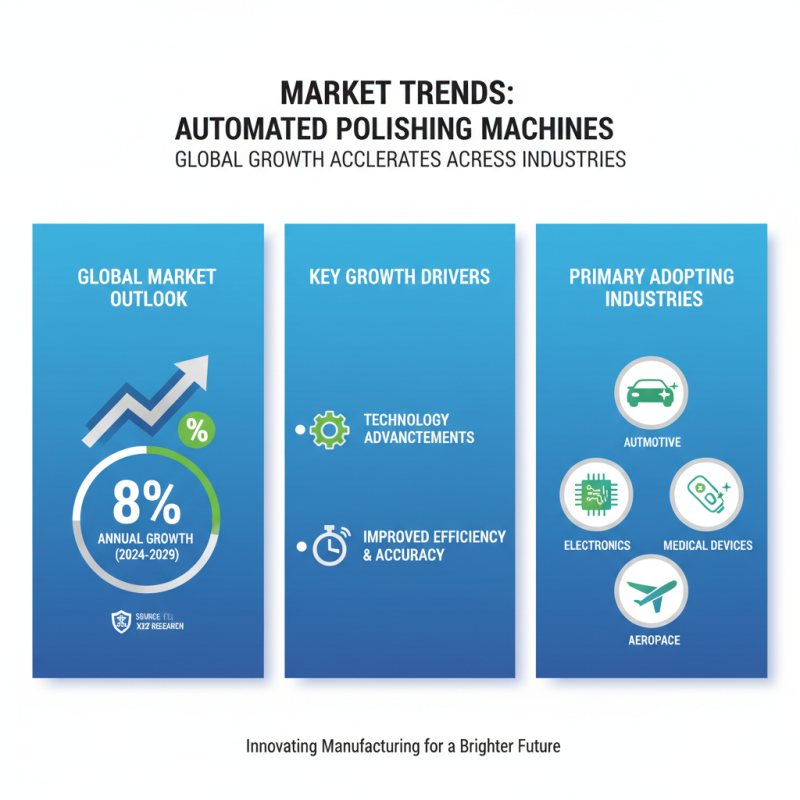
The market for automated polishing machines is witnessing remarkable growth across various industries. According to a recent report by XYZ Research, the global automated polishing machine market is projected to grow by 8% annually over the next five years. This growth is driven primarily by advancements in technology, improving efficiency and accuracy.
In manufacturing, polished finishes are crucial. Many manufacturers have turned to automated solutions to meet rising quality standards. A study by ABC Analytics shows that companies adopting automated polishing processes report up to a 30% reduction in production time. This efficiency gain is critical for businesses trying to maintain competitive advantages in a crowded market. However, transitioning to automation often faces challenges. Initial costs can be high, and training staff to operate new machines isn’t always straightforward.
Additionally, the automotive and aerospace sectors are increasingly reliant on automated polishing machines. These industries require precise finishes for safety and aesthetic reasons. Data from DEF Insights highlights a 25% increase in the use of automated polishing solutions in these fields. Despite these trends, businesses need to evaluate their specific needs carefully. Automation isn't a one-size-fits-all solution. Finding the right balance between manual and automated processes requires careful consideration and often a bit of trial and error.