leave a message

How to Choose a CNC Die Casting Machine in 2026?

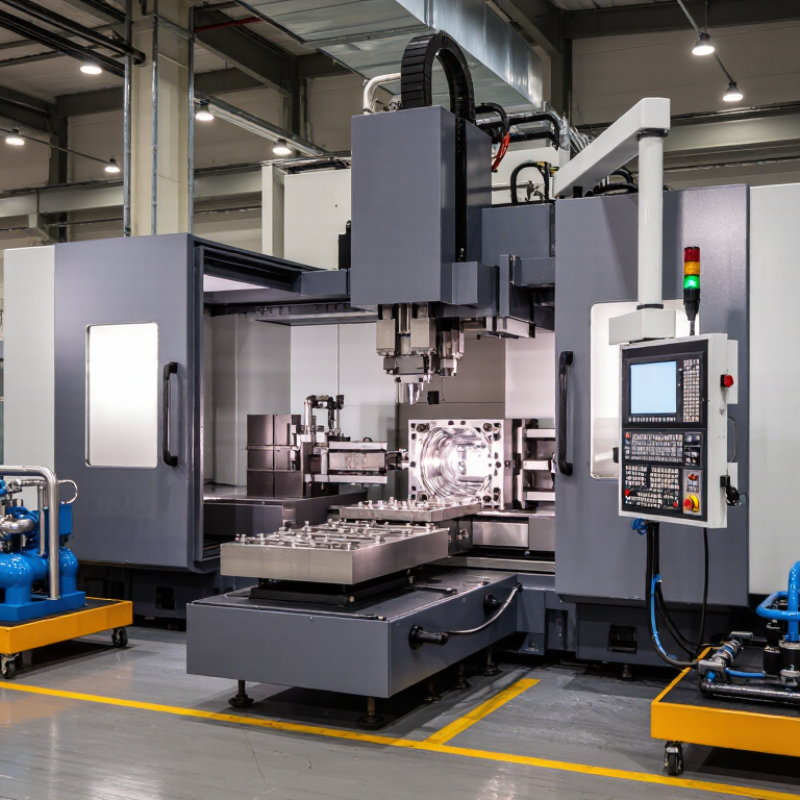
Choosing a Cnc Die Casting Machine in 2026 requires more than comparing tonnage and catalog prices. The right decision affects casting quality, cycle time, energy use, maintenance, and operator safety. A machine may look impressive on paper, yet struggle with thin walls, unstable temperatures, or frequent downtime on a real production floor.

This guide examines the practical factors behind a reliable purchase. It considers clamping force, injection speed, shot control, automation compatibility, mold dimensions, and aluminum or zinc alloy requirements. It also explains how digital monitoring, predictive maintenance, and energy-efficient hydraulic systems can influence long-term operating costs. Small details matter. A poorly positioned service panel can turn a simple repair into several lost hours.

Look beyond the brochure.

A trustworthy evaluation should include documented test results, supplier references, warranty terms, spare-parts availability, and technician training. Independent standards and verified factory data deserve more attention than impressive marketing language. Buyers should request sample castings using their own molds or closely matched tooling. Surface finish, porosity, flash, and dimensional consistency often reveal more than a showroom demonstration.

No machine is perfect. That matters.

Production teams may also underestimate floor space, cooling requirements, electrical capacity, and integration challenges. A lower purchase price can become expensive when installation delays or unstable process control appear later. This article offers a structured way to compare each Cnc Die Casting Machine against present production needs and future expansion plans. Careful selection will not eliminate every problem, but it can make problems visible, manageable, and less costly.
How to Choose a CNC Die Casting Machine in 2026?

CNC Die Casting Machines: Definition, Functions, and Key Applications

A CNC die casting machine combines controlled metal injection with computerized process management. It regulates shot speed, pressure, plunger position, cooling time, and mold movement. These controls help produce repeatable aluminum, magnesium, or zinc parts. Sensors can record pressure curves and cycle data. Operators can then identify defects before they spread across a production batch. However, CNC control does not automatically guarantee quality. Poor mold design still creates porosity, flash, or incomplete filling.

According to Grand View Research, the global die casting machine market was valued at about USD 3.5 billion in 2023. Its report projects continued growth through 2030, supported by automotive, electronics, and industrial equipment demand. A 2024 MarketsandMarkets analysis also identifies lightweight components and automated production as major growth factors. These findings matter when choosing a machine in 2026. Higher clamping force suits large structural parts, while smaller systems may reduce energy use and material waste.

Applications include motor housings, transmission cases, pump bodies, connectors, and heat-management components. A practical evaluation should compare shot accuracy, clamping stability, cycle time, energy consumption, die dimensions, and service access. Check the machine beside the actual mold, not only its brochure. No selection rule is perfect. A machine with impressive tonnage may still perform poorly with unstable temperature control. Trial runs, defect records, and operator feedback often reveal more than headline specifications.
Assessing Material, Part Design, and Production Requirements

How to Choose a CNC Die Casting Machine in 2026?

Material selection controls far more than melting temperature. Aluminum needs strong filling speed, reliable heat removal, and careful oxidation control. Zinc usually supports thinner walls and lower injection temperatures. Magnesium demands stricter fire prevention and process discipline. The International Aluminium Institute reports that recycled aluminum uses about 5% of the energy required for primary aluminum. That figure matters when sustainability targets affect material purchasing. Still, recycled feedstock can vary. Test it.

Part geometry should determine the machine, not a convenient machine already available. Calculate projected area, cavity pressure, wall thickness, and runner volume before comparing clamping force. NADCA’s Die Casting Design guidelines emphasize uniform walls, generous fillets, and controlled transitions. A sharp internal corner may create a visible crack or trap air. A long rib can cool unevenly. Inspect a sample mold section, especially around slides and ejector pins. Design software helps, but it can miss shop-floor behavior.

Production requirements expose weak decisions. Estimate annual volume, cycle time, cavity count, scrap rate, and planned maintenance hours. A 20-second cycle produces 180 parts per hour before downtime. The real output will be lower. The U.S. Department of Energy’s Industrial Decarbonization Roadmap identifies energy and process efficiency as major improvement opportunities in metal manufacturing. Compare kWh per shot, oil temperature stability, automation interfaces, and data access. One overlooked detail is recovery time between cycles. It can quietly limit output. Be willing to revise the choice after a pilot run.

Comparing Machine Types, Tonnage, Injection Systems, and CNC Features

How to Choose a CNC Die Casting Machine in 2026?

Machine type should match the alloy, part size, and production rhythm. Cold-chamber machines suit aluminum alloys and larger castings. Hot-chamber machines often handle zinc alloys efficiently. Magnesium may require specialized thermal and safety controls. Check the shot sleeve volume before comparing brochures. A machine with excessive capacity can increase energy use and reduce sensitivity during filling.

Tonnage depends on projected area, cavity pressure, and a practical safety margin. Do not select clamping force from part weight alone. I still see buyers overbuy tonnage. That feels safe, but it can hide waste. NADCA’s 2024 Product Specification Standards emphasize controlling flash, dimensional variation, and process conditions. These factors make real-time pressure and position feedback valuable. Compare single-stage and two-stage injection systems carefully. Servo-hydraulic systems can improve repeatability, while accumulator systems may deliver stronger peak speed. The best choice depends on cycle targets and maintenance skills.

Tips: Request trial data using your alloy and mold. Measure fill time, peak pressure, cycle time, and scrap rate. CNC features should include recipe control, alarm history, remote diagnostics, and closed-loop monitoring. Data visibility matters. The U.S. Department of Energy’s 2022 materials report states that recycled aluminum uses about 95% less energy than primary aluminum. Therefore, stable shot control can support both quality and material efficiency. Still, software alone cannot fix poor venting, unstable temperatures, or weak operator training. Leave room for improvement.

How to Choose a CNC Die Casting Machine in 2026? — Comparing Machine Types, Tonnage, Injection Systems, and CNC Features

Practical comparison of common cold-chamber die-casting configurations and selection factors. Figures are typical engineering ranges rather than brand-specific specifications.
Machine Type Typical Clamping-Force Range Common Applications Injection System CNC and Automation Features Main Advantages Key Limitations
Standard Hydraulic Cold-Chamber Machine 160–1,600 tonnes Automotive brackets, housings, motor components, pumps, and general aluminum or magnesium castings. Hydraulic accumulator-driven injection with programmable slow-shot, fast-shot, and intensification stages. PLC or CNC-style recipe control, shot-profile adjustment, die-temperature monitoring, automatic lubrication, and basic data logging. Proven design, broad mold compatibility, strong injection force, and comparatively straightforward maintenance. Higher hydraulic heat generation and energy use than fully electric or hybrid systems; more oil-related maintenance.
High-Speed Cold-Chamber Machine 250–1,600 tonnes Thin-wall covers, structural parts, transmission housings, and components requiring short filling times. High-response hydraulic accumulator system, often with closed-loop control of velocity and pressure. Multi-stage shot control, real-time position and pressure feedback, automatic process alarms, and traceability records. Fast metal injection, improved filling of thin sections, and better repeatability for demanding molds. Higher purchase cost and greater sensitivity to die design, lubrication quality, and process setup.
Two-Platen Die-Casting Machine 400–4,000 tonnes Large structural castings, battery trays, front-end modules, and large vehicle or industrial housings. Hydraulic or servo-hydraulic injection; compact two-platen clamping uses direct mold locking rather than a long tie-bar layout. Automatic mold-height adjustment, clamp-position monitoring, robotic part removal, integrated spray systems, and centralized production data. Reduced floor-space requirement for a given clamp force and good access around the mold area. Large-die handling and peripheral equipment can be costly; installation requires substantial floor loading and utilities.
Servo-Hydraulic Machine 160–2,000 tonnes Mixed production where energy efficiency, controllability, and compatibility with existing hydraulic processes are important. Servo motor controls the hydraulic pump output, while an accumulator may provide peak injection flow. Closed-loop shot control, programmable pressure curves, energy monitoring, predictive-maintenance alerts, and network connectivity. Lower idle energy consumption, smoother control, and easier integration with automated cells. More complex controls and higher service requirements for servo drives, sensors, and electronic components.
Hybrid or Electric-Assisted Machine 160–1,300 tonnes High-repeatability parts, clean manufacturing areas, precision housings, and operations with high machine utilization. Electric servo drives handle selected machine movements; hydraulic circuits may remain for clamping or high-pressure injection. High-resolution position feedback, recipe protection, remote diagnostics, process capability monitoring, and automatic quality reports. Precise motion, reduced idle energy use, low noise, and strong repeatability when correctly maintained. Higher initial investment and increased dependence on qualified electrical and controls support.
Hot-Chamber Machine 20–400 tonnes Zinc, tin, and selected low-melting-point alloys; small fittings, hardware, connectors, and decorative components. Integrated gooseneck or immersion injection system keeps the shot sleeve connected to the molten-metal bath. Automatic lubrication, programmable shot cycles, die-temperature control, part extraction, and basic production monitoring. Very short cycle times, low metal-transfer losses, and efficient operation for suitable alloys. Generally unsuitable for aluminum alloys because molten aluminum can rapidly attack the submerged injection components.
Selection guideline: Choose clamping force from projected casting area, cavity pressure, and a safety margin—not from part weight alone. Confirm the required shot weight, injection pressure, shot speed, die dimensions, tie-bar spacing or platen clearance, ejection stroke, cooling capacity, automation interfaces, and local electrical requirements before finalizing the machine.

Evaluating Accuracy, Cycle Time, Energy Use, and Automation Options

How to Choose a CNC Die Casting Machine in 2026?

Choosing a CNC die casting machine in 2026 starts with measurable accuracy, not attractive specifications. Review repeatability data at the actual shot speed, die temperature, and alloy used. A machine holding ±0.02 mm on paper may drift after several hours. Request sample parts, dimensional reports, and inspection records from comparable production runs. Check clamping stability, injection pressure control, and thermal management. Use gauges. Ask how calibration is controlled.

Cycle time should include loading, injection, solidification, ejection, and die spraying. A short injection stroke means little if cooling takes too long. Measure complete cycles beside the machine, with operators following normal procedures. Energy use also deserves direct testing. Compare kilowatt-hours per shot, including heating, hydraulics, cooling, and idle periods. A smaller motor is not automatically more efficient. Poor insulation or frequent standby recovery can erase the expected savings. The numbers may surprise you.

Automation should match your real production pattern. Useful options include robotic part removal, automatic lubrication, die-change assistance, vision inspection, and production-data logging. Confirm how these systems communicate with existing controls. During evaluations, test fault recovery, not only ideal operation. I have seen highly automated cells stop because one sensor became dirty. That weakness matters. Keep manual access for maintenance and quality checks. Full automation can reduce labor, yet it may also complicate troubleshooting. Ask for training records, spare-part plans, and documented service procedures before approving the purchase.

How to read this benchmark: The chart uses a 0–100 selection score, where a higher score indicates better performance. The benchmark represents typical 2026 engineering ranges for comparable die-casting cells: repeatability of approximately 0.012–0.030 mm, cycle times of 25–45 seconds, energy consumption of 0.38–0.90 kWh per kilogram of castings, and automation readiness of 45–95%. Actual results depend on casting size, alloy, mold design, shot profile, peripheral equipment, and factory integration.

Selecting Suppliers, Total Costs, Safety Standards, and After-Sales Support

Choosing a CNC die casting machine in 2026 requires more than comparing tonnage and purchase prices. Supplier evaluation should include factory audits, reference installations, response times, and spare-parts availability. Ask for cycle-time records under comparable alloy and shot-weight conditions. A polished demonstration may hide difficult maintenance access.

Total cost must include tooling, electricity, cooling, die maintenance, software updates, training, and lost production. The International Energy Agency reported that industry consumed about 37% of global final energy in 2023. Energy efficiency therefore deserves a line in the quotation. The U.S. Department of Energy notes that compressed-air leaks can waste 20–30% of system output. Measure air demand, not just machine power. My first equipment shortlist focused too heavily on the lowest offer.

Safety documentation should cover risk assessment, guarding, emergency stops, interlocks, and control-system validation. Request evidence aligned with ISO 12100, ISO 13849-1, and IEC 60204-1, while checking local regulations with a qualified safety engineer. CE-style paperwork alone may not prove safe integration. It can be incomplete.

After-sales support should specify remote diagnostics, on-site arrival targets, technician qualifications, and critical spare-parts stock. A written service-level agreement is stronger than informal promises. Require acceptance tests for injection repeatability, temperature control, alarms, and recovery after power loss. Keep a small contingency budget; real factories rarely behave like test cells.