- Home
- Products
- Why Choose Us
- Resource
- About Us
- News
- Blog
- Contact Us
leave a message


The construction machinery industry stands at the forefront of manufacturing innovation, where precision engineering meets heavy-duty performance requirements. Within this demanding sector, power transmission components—including gears, shafts, hydraulic cylinders, and engine parts—require exceptional surface quality and dimensional accuracy. Brush deburring machines have emerged as critical equipment in achieving these stringent standards, transforming how manufacturers approach surface finishing for construction machinery power parts.
The global construction equipment market, valued at over $180 billion, continues to expand driven by infrastructure development, urbanization, and technological advancement. This growth directly impacts the demand for high-quality power components that can withstand extreme operating conditions. Brush deburring machines have become indispensable in this ecosystem, addressing the critical need for burr-free, precisely finished surfaces that ensure optimal component performance and longevity.
Modern construction machinery manufacturers face mounting pressure to reduce production costs while simultaneously improving quality standards. Traditional manual deburring methods, once standard practice, have proven inadequate for meeting contemporary production volumes and consistency requirements. Automated brush deburring systems now process thousands of components daily, delivering uniform results that manual operations cannot match.
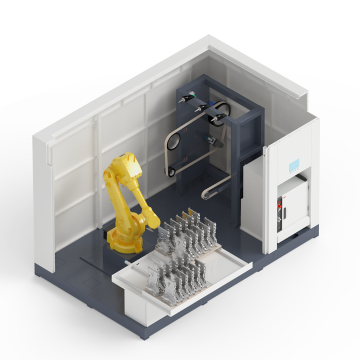
Contemporary brush deburring machines designed for construction machinery applications incorporate advanced features that address the unique challenges of processing large, heavy components. These systems typically feature multi-axis robotic arms with payload capacities ranging from 50kg to 300kg, enabling them to handle substantial power transmission parts such as excavator swing gears, bulldozer final drive components, and crane slewing bearings.
The brush technology itself has evolved significantly. Modern systems employ specialized abrasive nylon brushes with silicon carbide or aluminum oxide impregnation, offering controlled material removal rates between 0.01mm to 0.5mm depending on application requirements. Variable speed control, typically ranging from 500 to 3000 RPM, allows operators to optimize processing parameters for different materials—from hardened steel crankshafts to aluminum hydraulic manifolds.
Consistency: Automated brush deburring eliminates human variability, ensuring every component meets identical quality standards regardless of production volume.
Efficiency: Modern systems process components 3-5 times faster than manual methods while simultaneously reducing labor costs by up to 60%.
Safety: Removing operators from direct contact with rotating machinery and abrasive materials significantly reduces workplace injuries.
Ferrous Metals: Carbon steel, alloy steel, stainless steel components including gears, shafts, and structural elements.
Non-Ferrous Metals: Aluminum, brass, bronze parts such as hydraulic housings, bushings, and fittings.
Cast Components: Iron and aluminum castings requiring removal of parting lines, gates, and surface imperfections.
The versatility of brush deburring machines makes them suitable for numerous applications throughout construction machinery production. In transmission manufacturing, these systems excel at finishing gear teeth, removing burrs from keyways, and polishing bearing surfaces. The consistent surface finish achieved through automated brushing directly contributes to reduced noise, vibration, and wear in final assemblies.
Hydraulic component production represents another critical application area. Valve bodies, cylinder barrels, and manifold blocks require burr-free internal passages to prevent contamination and ensure proper fluid flow. Brush deburring machines equipped with specialized tooling can access complex internal geometries, removing burrs and achieving surface roughness values below Ra 0.8μm—essential for hydraulic system reliability.
Engine component finishing presents unique challenges that modern brush deburring systems address effectively. Crankshafts, connecting rods, and cylinder heads require precise surface preparation before assembly. Automated brushing removes machining burrs, blends radius transitions, and prepares surfaces for subsequent coating operations, all while maintaining critical dimensional tolerances within ±0.02mm.
Recent technological developments have dramatically expanded brush deburring capabilities. Integration of machine vision systems enables real-time quality inspection, automatically detecting remaining burrs and adjusting processing parameters accordingly. This closed-loop control ensures consistent results even when processing components with dimensional variations.
Artificial intelligence and machine learning algorithms now optimize brush paths and processing parameters based on component geometry and material properties. These systems learn from each processing cycle, continuously improving efficiency and quality. Predictive maintenance capabilities monitor brush wear, spindle vibration, and motor current, scheduling maintenance before failures occur and maximizing equipment uptime.
The construction machinery sector increasingly demands environmentally sustainable manufacturing processes. Modern brush deburring systems address this requirement through dry processing capabilities that eliminate coolant usage, reducing both environmental impact and operating costs. Dust collection systems capture abrasive particles and metal debris, enabling material recycling and maintaining clean working environments.
Customization and flexibility have become paramount as manufacturers produce increasingly diverse product ranges. Modular brush deburring systems with quick-change tooling allow rapid reconfiguration for different component families. Some advanced systems can process multiple part types within a single production run, automatically adjusting parameters based on component identification through RFID or barcode scanning.
The integration of brush deburring machines into comprehensive manufacturing execution systems (MES) provides unprecedented production visibility. Real-time data collection tracks processing times, quality metrics, and equipment performance, enabling data-driven decision making and continuous improvement initiatives. This connectivity supports Industry 4.0 objectives, positioning manufacturers for future competitive advantage.
Successful implementation of brush deburring technology requires careful consideration of several factors. Component fixturing design critically impacts processing quality and cycle time. Custom fixtures must securely hold parts while providing brush access to all required surfaces. Modular fixture systems offer flexibility for processing component families with similar geometries.
Brush selection significantly influences results and operating costs. Manufacturers must balance aggressiveness, durability, and cost when specifying brushes for specific applications. Ceramic-filled nylon brushes offer extended life for heavy deburring operations, while softer brushes provide superior surface finish for final polishing steps. Maintaining optimal brush inventory and implementing systematic replacement schedules ensures consistent processing quality.
Operator training remains essential despite automation advances. Personnel must understand processing parameters, recognize quality issues, and perform routine maintenance. Comprehensive training programs covering equipment operation, safety procedures, and troubleshooting techniques maximize return on investment and minimize downtime.
The financial justification for brush deburring machine investment extends beyond direct labor savings. Improved component quality reduces warranty claims and field failures, protecting brand reputation and customer relationships. Consistent surface finish quality enables tighter assembly tolerances, improving overall machine performance and reliability.
Production capacity increases achieved through automation allow manufacturers to meet growing demand without proportional facility expansion. A single automated brush deburring cell can replace 3-4 manual finishing stations, freeing valuable floor space for other operations. Reduced work-in-process inventory and shorter lead times improve cash flow and customer responsiveness.
Energy efficiency represents another economic advantage. Modern brush deburring systems consume 30-40% less energy than traditional grinding or belt finishing equipment while achieving comparable or superior results. Combined with reduced consumable costs and lower maintenance requirements, total cost of ownership typically justifies investment within 18-24 months for medium to high-volume production environments.

We are a comprehensive enterprise intelligent equipment manufacturing, processing, sales, maintenance and technology research and development. Leading in design and manufacture of automatically equipment for faucet production equipment, sanitary ware, bathroom fixtures and metal steel products industries, hardware accessories auto parts industry, door lock industry parts, new energy industry and other products casting, deburring, grinding, machining and polishing automation equipment.
We provide automatic Low Pressure Die Casting Machine (LPDC), Robotic Cell Grinding And Polishing machines, Robotic Deburring Solution, CNC Polishing Machine, Sand Core Shooting Machine, Gravity Die Casting Machine, Industry Furnace, Automatic CNC Sprue Cutting Machine.
Dingzhu serves the manufacturing industries with total solutions of intelligent production management system, innovative production technologies and the eco-friendly renovation plan. We know how to transfer the technology to end users.
Dingzhu's young and professional engineers focus on innovative technology research and development, strive to create the Dingzhu be a famous brand in worldwide. We have obtained patents of innovation and practical application in products for the Low Pressure Die Casting Machine, Auto Grinding and Polishing Equipment. The company's strong scientific and technological strength and rich professional experience, from design to installation operations, are constantly improving, with good reputation and quality service by the majority of users and well-know enterprises.

Core members possess 20 years of experience in faucet production equipment R&D, having served over 100 global manufacturing enterprises;

50 patents in self-developed technologies such as dynamic pressure control for low-pressure casting and multi-axis robotic flexible deburring algorithms;

Comprehensive technical support, from mold design (CAE simulation supported), factory layout planning (lean production layout), to personnel training, ensuring rapid production startup.

Global Service Network: 24/7 Rapid Response
Localized Support: Direct service centers in India, Turkey, Egypt, and Iran, staffed with 10+ professional engineers;

2-hour response to equipment failures, on-site support within 48 hours; global spare parts inventory for key components to ensure zero production downtime;

Provide equipment intelligent upgrades and process iteration solutions to continuously enhance customer competitiveness.


North America
Europe

China
Latin America
Africa
Australia

Xiamen Dingzhu Intelligent Equipment Co., Ltd. specializes in the research and development, production, sales and service of automatic low pressure casting machine (LPDC), robotic cell grinding and polishing machine, furnace, gravity die casting machine, automatic sand core shooting machine, cnc polishing machine etc. A number of national patents have been obtained. The range of equipment covers a wide range of fields and applications including: sanitary ware industry, hardware industry, auto parts industry, new energy industry, electronics industry and many other industries.
Looking to the future, Dingzhu intelligent equipment will adhere to the industry breakthrough as the leading development strategy, and constantly strengthen technological innovation, management innovation and marketing innovation as the core of the innovation system, and strive to become the leader in the field of intelligent, automated equipment application solutions.
Founded in 2016


Company Vision: Be an industry leader to create a world famous brand
Company Mission: Free the hands of workers and make production safer, greener, and more efficient
Core Values:
People Oriented
Customer First
Continuous Innovation
Pursuit for Excellence

Dare to innovate. Continuous optimization. Emphasis on technology and service.
People-oriented is the core feature of Dingzhu intelligent equipment.
We invest in staff training every year and provide free lunch to our staff.
We have a great vision, demand high standard of work, and pursue "let all the work become a fine product".

Explore our full range of brush deburring and automated grinding systems engineered specifically for construction machinery power component manufacturing. Each solution is designed to deliver precision, consistency, and efficiency at industrial scale.