- Home
- Products
- Why Choose Us
- Resource
- About Us
- News
- Blog
- Contact Us
leave a message
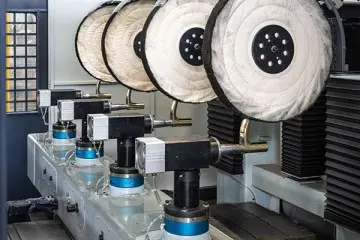
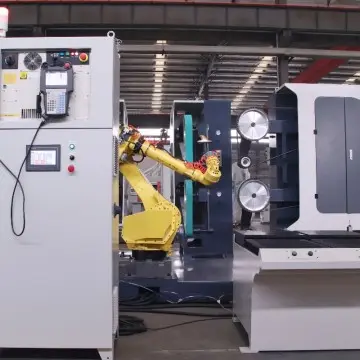
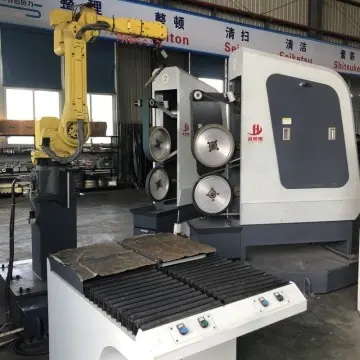
Explore our flagship robotic grinding, polishing, and deburring systems — purpose-built for kitchenware tools, faucet components, and precision metal castings.
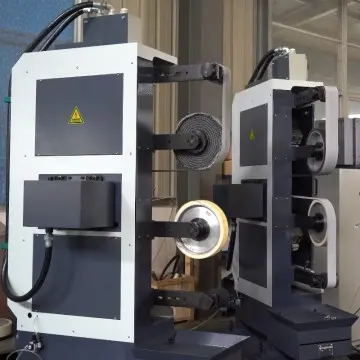
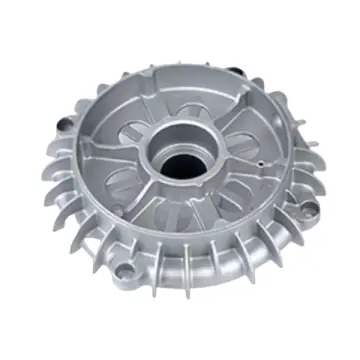
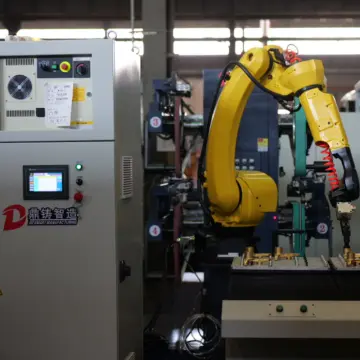
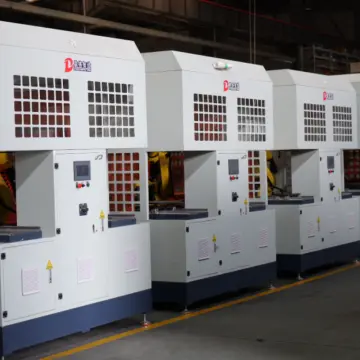
The kitchenware and hardware tools sector is undergoing a profound transformation, driven by rising quality standards, labor cost pressures, and the demand for mirror-finish surfaces in faucets, cookware, and sanitary components.
Global kitchenware production exceeds $280 billion annually. Consumers increasingly demand flawless surface finishes on faucets, cookware, and bathroom fixtures — driving manufacturers to adopt robotic casting cutting and automated grinding polishing systems that achieve consistent Ra 0.2–0.8 µm surface roughness impossible with manual labor.
Manual grinding and polishing of kitchenware castings has historically accounted for 30–45% of total production labor costs. With robotic grinding polishing machines now capable of processing 600–1,200 pieces per shift — 4–6× the output of skilled human operators — manufacturers across Southeast Asia, Europe, and the Middle East are accelerating their automation investment cycles.
The industrial robotic grinding and polishing market is projected to grow at a CAGR of 9.4% through 2030, reaching $4.8 billion. The kitchenware and sanitary ware sub-segment is among the fastest-growing verticals, particularly in China, India, Turkey, and Brazil, where faucet and hardware manufacturing clusters are rapidly upgrading to smart factory configurations.
From AI-driven adaptive control to sustainable manufacturing, these are the forces reshaping how kitchenware tools are cast, cut, ground, and polished at industrial scale.
Next-generation casting cutting and grinding polishing machines integrate AI-powered force feedback sensors that dynamically adjust grinding pressure in real time. This eliminates over-grinding defects on thin-walled kitchenware castings (e.g., brass faucet bodies, aluminum cookware handles) and reduces scrap rates by up to 60%, while achieving sub-micron surface consistency across entire production batches.
6-axis and 7-axis collaborative robots are increasingly deployed in kitchenware grinding polishing lines, enabling complex curved surface finishing on faucet spouts, pot handles, and valve bodies. These cobots can be reprogrammed within hours for new product variants, delivering the flexibility that fast-changing kitchenware OEM markets demand without costly retooling.
The industry is moving toward fully integrated lines where low pressure die casting (LPDC) machines, automatic sprue cutting machines, robotic deburring cells, and CNC polishing systems are connected via conveyor and MES software. This end-to-end approach reduces work-in-progress inventory by 70% and enables real-time quality traceability — critical for kitchenware brands targeting European and North American compliance standards.
Environmental regulations in China, the EU, and India are tightening standards for grinding dust and coolant discharge in kitchenware factories. Modern robotic grinding polishing solutions now incorporate closed-loop coolant recycling, high-efficiency dust collection, and dry-grinding abrasive technologies that reduce hazardous waste output by over 80%, helping manufacturers achieve ISO 14001 certification and meet ESG reporting requirements.
Leading casting cutting machine manufacturers now embed IoT sensors and digital twin platforms into their grinding polishing equipment. Factory managers can monitor spindle load, abrasive wear, vibration signatures, and OEE metrics remotely via mobile dashboards — enabling predictive maintenance schedules that reduce unplanned downtime by 45% and extend machine service life by 30% in high-throughput kitchenware production environments.
3D vision systems are being integrated with robotic grinding polishing cells to automate workpiece loading, orientation detection, and post-process surface quality inspection. For kitchenware casting lines, this eliminates manual handling of sharp-edged castings, reduces operator injury risk, and enables 100% inline quality inspection — replacing costly offline CMM sampling that previously caught only 15–20% of surface defects.
From brass faucet bodies to stainless steel cookware and die-cast hardware accessories, our solutions address the most demanding surface finishing challenges in kitchenware manufacturing.
Brass and zinc alloy faucet bodies require multi-stage grinding (rough → semi-finish → mirror polish) after low pressure die casting. Robotic polishing cells achieve Ra ≤0.4 µm mirror finish on complex curved surfaces, reducing manual polishing labor by 85% and enabling electroplating adhesion rates above 99.5%.
Zinc alloy and aluminum die-cast hardware accessories — door handles, lock cylinders, window fittings — demand precise deburring of parting lines and gate sprue removal. Automatic CNC sprue cutting machines combined with robotic deburring cells process 800–1,500 pieces/hour with ±0.05mm dimensional accuracy, meeting OEM assembly tolerances.
Crankshafts, valve bodies, and engine housing castings require high-precision grinding with tight tolerances. Multi-axis robotic grinding machines with adaptive force control achieve Cpk ≥1.67 process capability on bearing seat surfaces, while integrated vision inspection systems ensure 100% defect detection before assembly.
Photovoltaic inverter casings and new energy vehicle battery housing components require burr-free edges and precise surface flatness for thermal management performance. Robotic deburring and grinding systems handle aluminum alloy and magnesium alloy castings with complex internal channels, achieving edge radius consistency of ±0.02mm across 10,000+ piece production runs.
Stainless steel angle valves, pot bodies, and cookware components demand mirror-finish polishing that meets food-contact safety standards (FDA, EU 10/2011). Fully automatic grinding and polishing machines process stainless steel with belt grinding + buffing compound sequences, achieving Ra ≤0.2 µm finishes that eliminate bacterial adhesion points and pass hygiene certifications.
Pneumatic tool components, electric motor housings, and precision electronic enclosures require micro-deburring of internal passages and threaded features. Robotic deburring solutions with compliant tool holders adapt to casting variation in real time, eliminating secondary rework operations and reducing component rejection rates from 8% to below 0.3%.
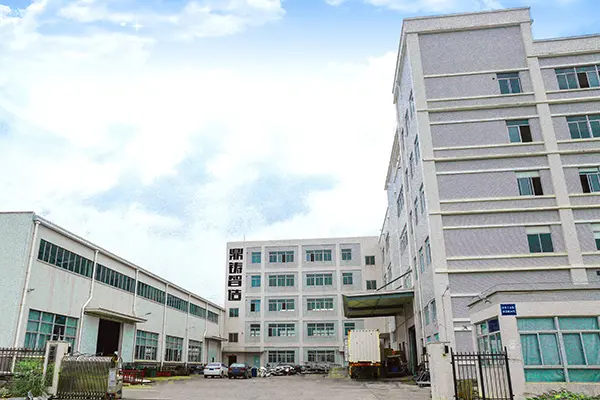 Xiamen Dingzhu Factory
We are a comprehensive enterprise in intelligent equipment manufacturing, processing, sales, maintenance, and technology research & development. Leading in the design and manufacture of automated equipment for faucet production, sanitary ware, bathroom fixtures, metal steel products, hardware accessories, auto parts, door lock components, new energy industries, and other products — covering casting, deburring, grinding, machining, and polishing automation equipment.
We provide automatic Low Pressure Die Casting Machines (LPDC), Robotic Cell Grinding and Polishing Machines, Robotic Deburring Solutions, CNC Polishing Machines, Sand Core Shooting Machines, Gravity Die Casting Machines, Industry Furnaces, and Automatic CNC Sprue Cutting Machines.
Dingzhu serves the manufacturing industries with total solutions of intelligent production management systems, innovative production technologies, and eco-friendly renovation plans. Our young and professional engineers focus on innovative technology R&D, striving to make Dingzhu a world-famous brand — with 50+ patents in Low Pressure Die Casting and Auto Grinding & Polishing Equipment.

Core members possess 20 years of experience in faucet production equipment R&D, having served over 100 global manufacturing enterprises across kitchenware, sanitary ware, and hardware industries.

50 patents in self-developed technologies including dynamic pressure control for low-pressure casting and multi-axis robotic flexible deburring algorithms — delivering unmatched precision in kitchenware grinding polishing applications.

Comprehensive technical support from mold design (CAE simulation supported), factory layout planning (lean production layout), to personnel training — ensuring rapid production startup for casting cutting and grinding polishing lines.

24/7 rapid response with localized support centers in India, Turkey, Egypt, and Iran — staffed with 10+ professional engineers ensuring minimal downtime for your kitchenware casting and polishing operations worldwide.

2-hour response to equipment failures, on-site support within 48 hours. Global spare parts inventory for key components ensures zero production downtime — critical for high-volume kitchenware grinding polishing operations.

Equipment intelligent upgrades and process iteration solutions to continuously enhance customer competitiveness — from legacy casting cutting machine retrofits to full robotic grinding polishing cell modernization programs.
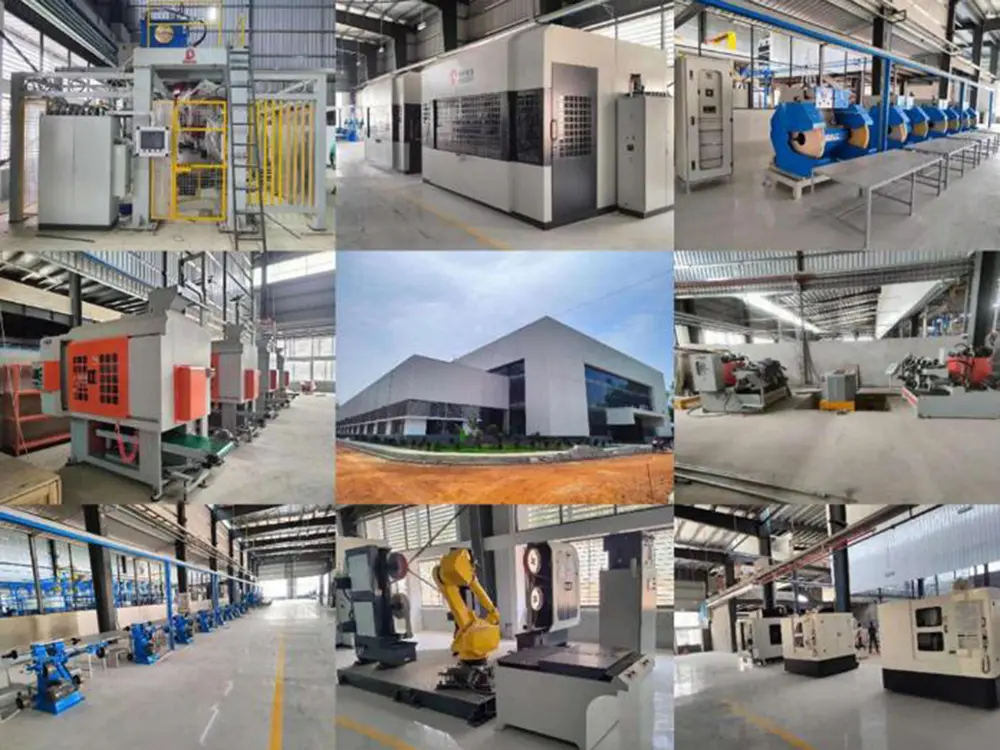
Xiamen Dingzhu Intelligent Equipment Co., Ltd. specializes in the research, development, production, sales, and service of automatic low pressure casting machines (LPDC), robotic cell grinding and polishing machines, furnaces, gravity die casting machines, automatic sand core shooting machines, and CNC polishing machines. A number of national patents have been obtained across these product lines.
Our equipment covers a wide range of fields including the sanitary ware industry, hardware industry, auto parts industry, new energy industry, electronics industry, and kitchenware tools manufacturing — delivering end-to-end casting cutting and grinding polishing automation solutions.
Looking to the future, Dingzhu Intelligent Equipment will adhere to industry breakthrough as the leading development strategy, constantly strengthening technological innovation, management innovation, and marketing innovation — striving to become the global leader in intelligent, automated casting cutting and grinding polishing equipment application solutions.
We are actively expanding our global footprint, exporting casting cutting machines and grinding polishing solutions to manufacturing hubs across Southeast Asia, the Middle East, Africa, South Asia, and Europe.
Dingzhu is looking forward to working with you — let us be part of your development journey in casting, grinding, and polishing automation for kitchenware and metal tools manufacturing.



Xiamen Dingzhu Intelligent Equipment Co., Ltd., since its establishment in 2016, has grown its R&D team to 60+ members, expanded its plant to 2,525 square meters, and achieved a turnover exceeding $100 million USD in 2022. This growth is inseparable from our deeply held corporate culture — a culture that drives every casting cutting machine and grinding polishing solution we create.
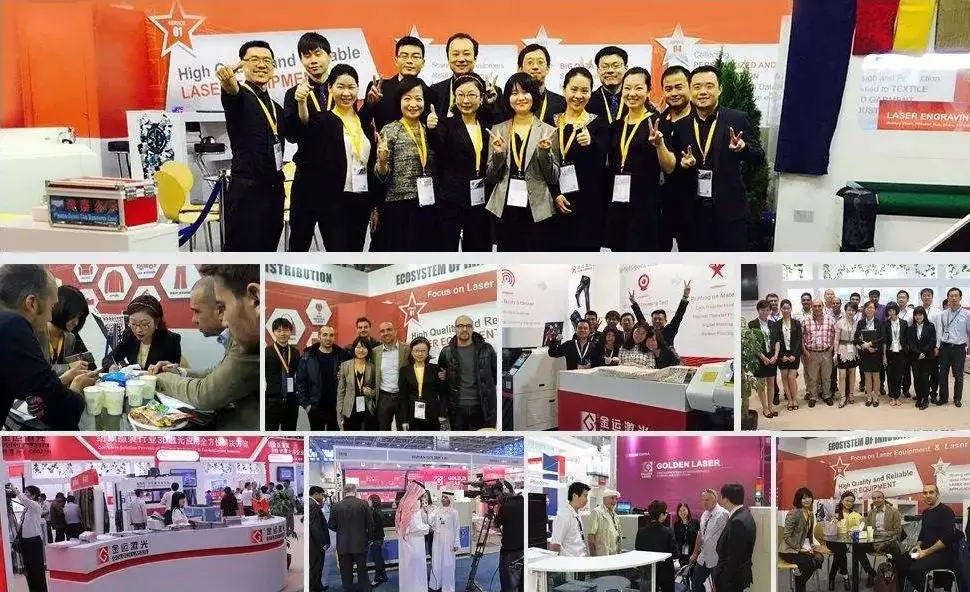


Company Vision: Be an industry leader to create a world-famous brand in casting cutting and grinding polishing automation.
Company Mission: Free the hands of workers and make production safer, greener, and more efficient.
Core Values:

Dare to innovate. Continuous optimization. Emphasis on technology and service. People-oriented is the core feature of Dingzhu Intelligent Equipment.
We invest in staff training every year and provide free lunch to our staff. We have a great vision, demand high standards of work, and pursue the goal: "let all the work become a fine product."
From robotic polishing cells to fully automatic brass casting machines — explore our comprehensive lineup of intelligent manufacturing equipment for kitchenware tools and metal components.