
- Home
- Products
- Why Choose Us
- Resource
- About Us
- News
- Blog
- Contact Us
leave a message
Precision robotic systems purpose-built for kitchenware tools, cookware, and metal hardware surface finishing.
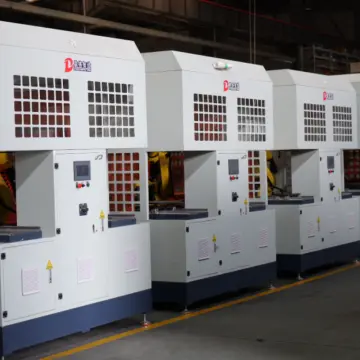


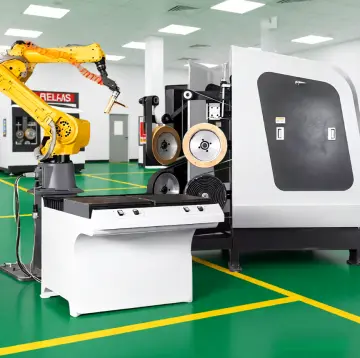
Why precision deburring and surface finishing are now mission-critical for kitchenware and hardware tool producers worldwide.
The global kitchenware and hardware tools manufacturing sector is undergoing a profound transformation. As consumer expectations for surface quality, hygiene compliance, and product longevity continue to rise, manufacturers are under increasing pressure to deliver components with flawless surface finishes — free of burs, sharp edges, and micro-defects that can compromise both safety and aesthetics.
Engine blocks deburring machines, originally developed for heavy automotive and industrial casting applications, have found a powerful second life in the kitchenware and hardware tools segment. The core challenge is identical: cast or machined metal components — whether a faucet body, a cookware handle bracket, a knife blade blank, or a pot lid fitting — all require consistent, repeatable deburring and surface preparation before downstream polishing, coating, or assembly.
According to industry research, the global metal deburring machine market is projected to exceedUSD 1.2 billion by 2028, with the kitchenware and household hardware segment accounting for one of the fastest-growing application verticals. This growth is driven by three converging forces: the shift from manual labor to robotic automation, tightening quality standards in export markets (particularly Europe and North America), and the rapid adoption of Industry 4.0 technologies across Asian manufacturing hubs.
China, as the world's largest producer of kitchenware and hardware tools, is at the epicenter of this transition. Factories in Guangdong, Zhejiang, and Fujian provinces are actively replacing manual grinding lines with intelligent robotic deburring cells — reducing labor costs by up to 60% while simultaneously improving surface consistency and reducing scrap rates.
Global metal deburring machine market projected to exceed USD 1.2 billion by 2028, with kitchenware as a key growth vertical.
Over 65% of new kitchenware grinding lines installed in 2024 incorporated robotic automation — up from 28% in 2019.
Automated deburring cells reduce direct labor costs by 50–65% while improving surface finish consistency by over 40%.
Engine blocks deburring technology adapted for the full spectrum of kitchenware and hardware tool manufacturing processes.
Cast aluminum and stainless steel cookware bodies require precise deburring of parting lines, gate remnants, and internal cavity edges. Robotic deburring cells with force-controlled spindles achieve Ra≤ 0.4μm surface finish on pot bodies, eliminating the risk of food contamination from micro-burs while preparing surfaces for non-stick coating adhesion.
Brass and zinc alloy faucet bodies are among the most demanding deburring applications — complex internal passages, multiple parting lines, and tight tolerances for sealing surfaces. Intelligent multi-axis robotic systems with adaptive path planning navigate these geometries autonomously, replacing 3–5 manual operators per shift with a single robotic cell.
Stamped and forged knife blanks require edge deburring and pre-polish grinding before heat treatment and final sharpening. High-speed belt grinding systems integrated with robotic handling achieve consistent edge geometry across thousands of pieces per shift, critical for premium cutlery brands targeting European and North American markets.
Die-cast zinc and aluminum hardware components — handles, hinges, lock bodies — demand bur-free surfaces for both functional fit and decorative finishing. Automated deburring followed by robotic polishing enables mirror-finish chrome plating and PVD coating adhesion, meeting the stringent quality requirements of premium hardware brands.
Engine block deburring technology directly transfers to EV battery housing components, motor end caps, and structural aluminum castings. The same force-controlled robotic deburring systems used for kitchenware faucet bodies are now deployed for new energy vehicle component finishing, demonstrating the cross-industry versatility of this technology platform.
Shower head bodies, valve housings, and decorative trim components require both functional deburring of water passage holes and cosmetic surface preparation for chrome or brushed finish plating. Integrated robotic cells combining deburring, grinding, and pre-polish operations reduce cycle time by up to 45% versus sequential manual processes.