


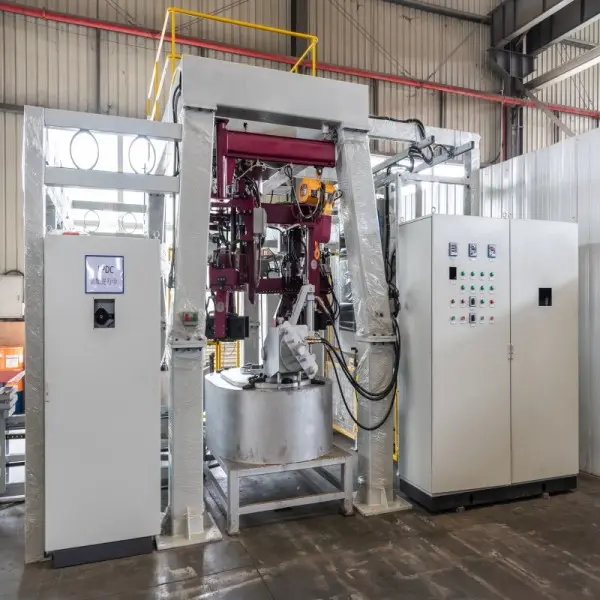
Sand Core Sintering
In casting processes, sand cores must not only have accurate shapes and dimensions but also maintain sufficient strength and stability under high-temperature molten metal.
Sand core sintering is the critical process that makes this possible.
Especially in high-temperature brass castings such as faucets and water meter housings, the quality of sand core sintering directly affects internal structures and yield rates.
1.What Is Sand Core Sintering?
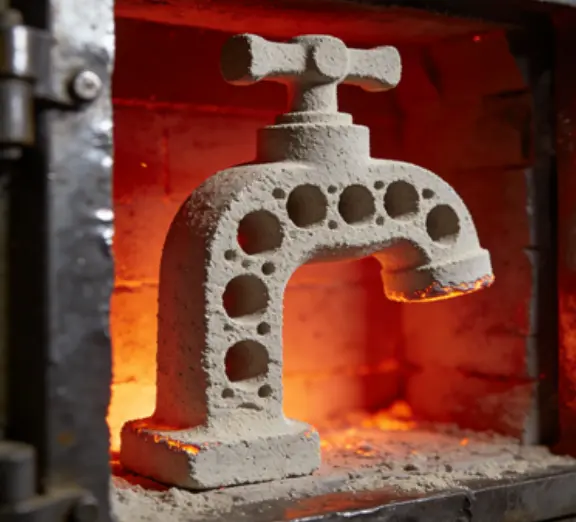
Sand core sintering refers to the process of strengthening the bonding between sand grains through heat or chemical reactions, improving overall core strength and thermal resistance.
After sintering, sand cores can withstand molten metal flow and high temperatures without deformation or collapse.
2.Why Is Sand Core Sintering Important?
Without proper sintering, sand cores may suffer from:
- Insufficient strength
- Softening under high temperature
- Erosion by molten metal
- Dimensional deviation of internal cavities
Proper sand core sintering helps to:
- Increase mechanical strength
- Improve thermal stability
- Ensure cavity accuracy
- Improve overall casting yield
3.Common Sand Core Sintering Methods
(1)Heat Sintering
Heat sintering strengthens sand cores through controlled heating.
Features:
- High strength
- Excellent stability
- Requires heating equipment
(2)Chemical Sintering
Chemical sintering uses resins or hardeners to achieve core strength.
Features:
- Fast curing
- Ideal for automatic core shooting machines
- Common in cold box processes
(3)Hybrid Sintering
Hybrid sintering combines thermal and chemical methods.
Features:
- Balanced strength and stability
- Suitable for complex core designs
4.Role of Sand Core Sintering in Low Pressure & Gravity Casting
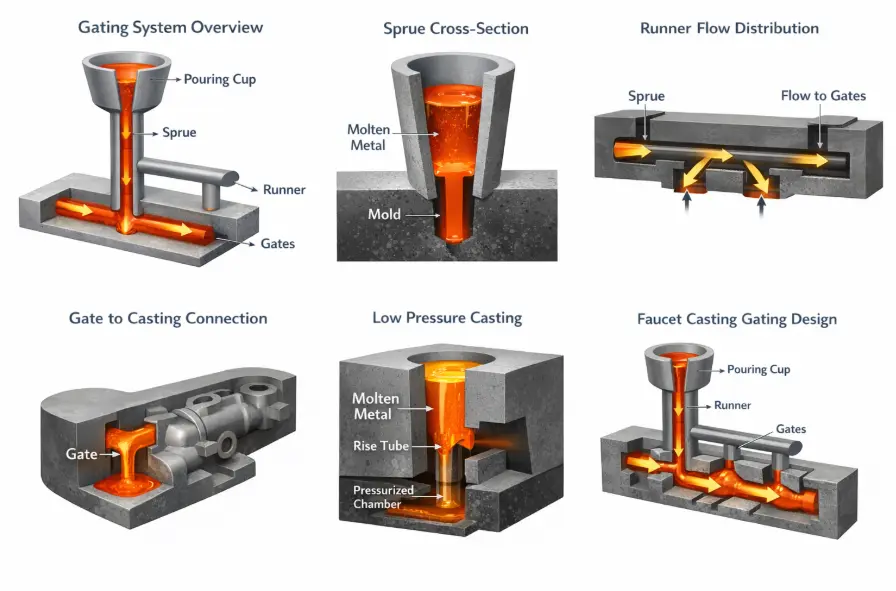
Low Pressure Casting:
- Requires higher core strength
- Cores must withstand continuous pressure
Gravity Casting:
- Must resist molten metal erosion
- Stability remains critical
Proper sintering is fundamental to success in both casting methods.
5.Sand Core Sintering & Automatic Core Shooting Machines
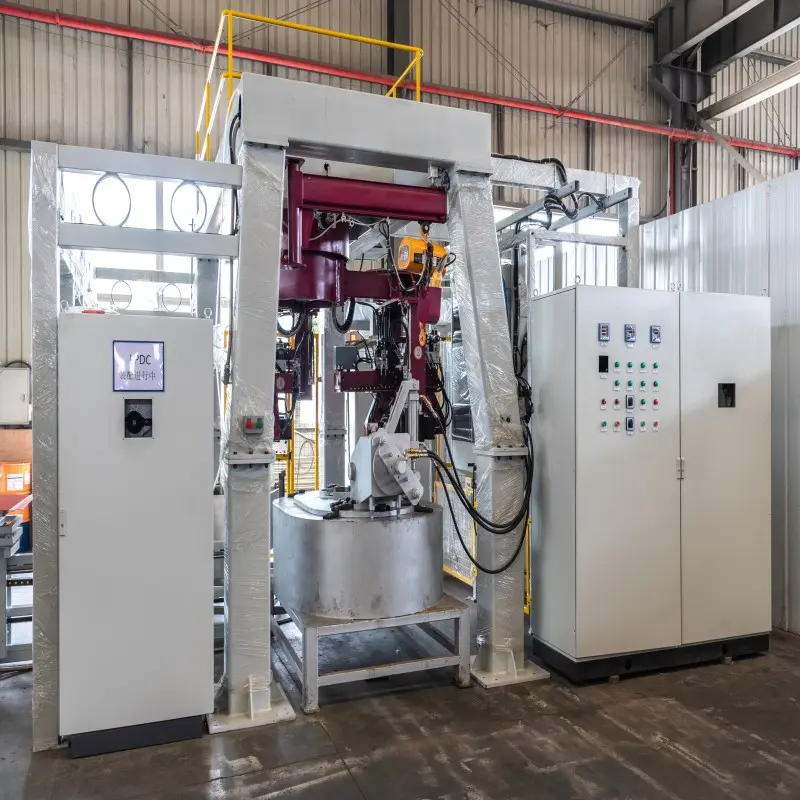
In modern foundries, sand core sintering is closely integrated with automatic core shooting machines.
Automatic core shooting machines enable:
- Precise core shaping
- Consistent sintering results
- Higher core production efficiency
This is especially important for mass production of brass faucets.
6.Impact of Sand Core Sintering on Cost & Yield
High-quality sintering helps to:
- Reduce core breakage
- Lower scrap rate
- Reduce rework costs
- Improve production stability
In the long run, proper sand core sintering reduces total manufacturing costs.
7.Typical Applications of Sand Core Sintering
Sand core sintering is widely used in:
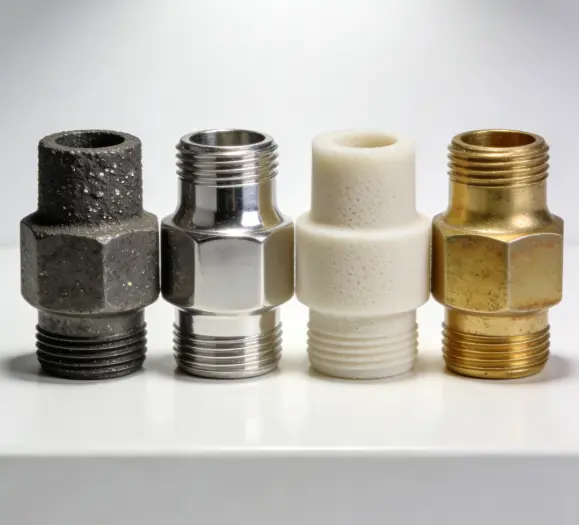
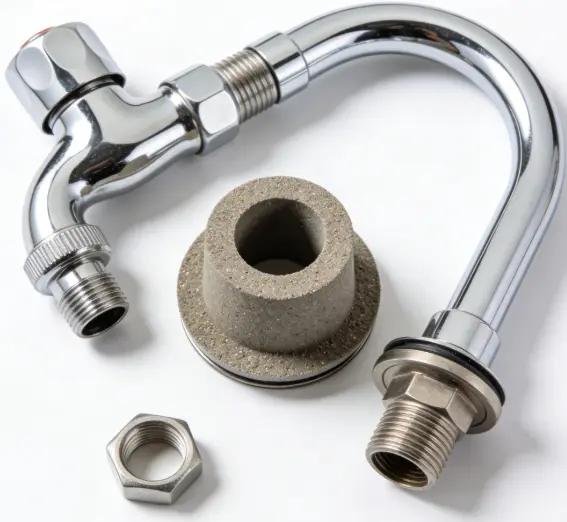
- Brass faucet casting
- Brass water meter housings
- Valves and fittings
- Sanitary hardware components
- Automated casting production lines
8.Conclusion
Although sand core sintering is a specialized process, it has a decisive impact on casting quality and production stability.
By applying proper sand core sintering processes together with automatic core shooting machines and automated casting systems, manufacturers can significantly improve consistency and competitiveness.