Choosing the right Cylinder Heads Grinding Machine can determine whether an engine rebuild feels precise or merely acceptable. A poor setup may leave uneven surfaces, visible cutter marks, or inconsistent material removal. Those defects can create sealing problems, wasted labor, and expensive rework.
Engine-building author and machining specialist Mike Mavrigian emphasizes, “Precision begins with preparation, not the machine.” That principle guides this review. A capable operator still needs accurate measurements, stable fixturing, suitable abrasives, and disciplined inspection. The machine matters. So does the person using it.
This guide examines 10 best Cylinder Heads Grinding Machine options for sale, focusing on practical workshop needs. We compare grinding accuracy, table stability, spindle performance, adjustment range, cooling systems, tooling support, and after-sales service. Some machines suit high-volume automotive shops. Others fit smaller rebuilding garages with tighter budgets and limited floor space.
Look for clean coolant flow. Check the head’s contact points. Listen for abnormal spindle vibration. Small details matter.
Specifications can look impressive on paper, yet real performance may differ. That is an uncomfortable point, but an important one. Published capacity does not always reveal setup difficulty, maintenance demands, or long-term reliability. Our selection therefore considers both technical data and everyday usability. The goal is not to name one perfect machine. It is to help you choose equipment that matches your cylinder-head materials, workload, accuracy expectations, and operator experience.
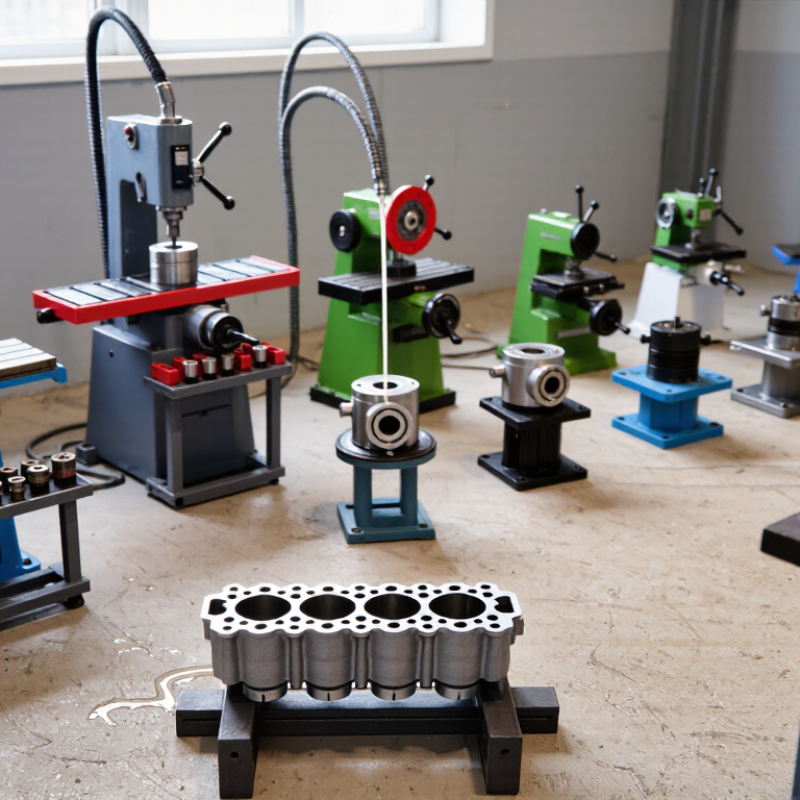
Cylinder head grinding machines restore flat, accurate sealing surfaces on engine heads. They remove warping, corrosion, and small impact marks from metal faces. The process supports a reliable gasket seal and helps prevent coolant or compression leaks. A rigid frame reduces vibration during cutting. This matters when working with aluminum or cast iron. In a workshop, operators usually secure the head, measure distortion, and select a suitable grinding depth. Clean coolant improves cutting performance and protects the abrasive wheel. Small details matter.
Common functions include controlled table movement, adjustable spindle speed, and precise material removal. A stable fixture keeps the cylinder head aligned during machining. Some machines also support surface milling, polishing, and finish correction. Operators should check the head before grinding because cracks cannot be repaired by surface work alone. I have found that measurement errors often cause more trouble than machine power. Do not trust appearance. A smooth surface can still be uneven across its width.
These machines serve engine rebuilding shops, maintenance departments, and specialized repair centers. They are useful for passenger vehicles, commercial engines, agricultural equipment, and older mechanical systems. For occasional users, a compact machine may offer better control and lower operating costs. Production workshops usually need stronger spindles, faster setup, and repeatable feed movement. Buyers should inspect wheel availability, table travel, coolant handling, and operator safety features. The ideal machine depends on head size, material, workload, and required surface finish. One limitation remains: improper setup can damage an otherwise repairable cylinder head.
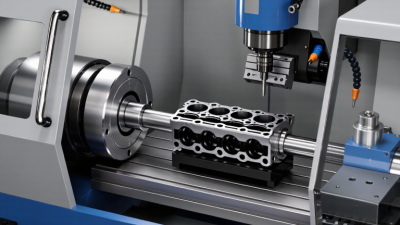
The chart compares ten common cylinder-head grinding machine configurations by typical maximum resurfacing width. The values represent practical engineering ranges for general workshop equipment and are intended as a selection guide. Actual capacity depends on the machine design, tooling, workholding method, and cylinder-head dimensions.
Cylinder head grinding machines differ by repair volume, material, and required finish. Choosing the right type prevents uneven sealing and repeated teardown. For small workshops, a manual resurfacing grinder offers direct control and lower operating costs. It suits occasional aluminum heads and modest engine sizes. Check table travel, clamping range, and wheel dressing access before buying. Small details matter.
A rotary table grinder works well for frequent automotive repairs. Its adjustable speed helps match cast iron and aluminum surfaces. Many models use abrasive wheels, while others accept CBN or PCD tooling. CBN performs well on hardened ferrous heads. PCD often handles aluminum with less loading. Coolant control remains important because heat can distort a thin head. Experienced machinists check flatness at several points, not only along the centerline.
High-volume workshops may prefer a CNC cylinder head grinder with automatic feed and repeatable settings. It reduces fatigue and supports consistent production. A dedicated valve seat and guide machine suits shops focused on combustion-chamber rebuilding. It requires accurate pilot alignment, stable fixtures, and suitable cutters. I have seen excellent machines produce poor results after rushed setup. The lesson is uncomfortable: capacity cannot replace measurement. Before choosing among machines for sale, confirm spindle accuracy, fixture support, service training, and spare tooling availability.
10 Best Cylinder Heads Grinding Machines for Sale
When comparing cylinder head grinding machines, accuracy deserves more than a brochure claim. ISO 230-2:2014 evaluates positioning accuracy and repeatability through measured movements. Ask for a recent inspection report, not an estimated tolerance. For valve-seat work, even a few microns can affect sealing, surface finish, and rework costs. Check spindle runout, table movement, fixture rigidity, and coolant stability under operating temperature. A machine may cut accurately when cold, then drift after an hour.
Capacity must match real workshop jobs. Measure the largest cylinder head, fixture height, swing, and grinding wheel diameter. A powerful motor is not automatically better. The U.S. Department of Energy reports that motor-driven systems consume about 69% of industrial electricity, so compare rated power with actual load and duty cycle. Excess power can increase heat, noise, and energy waste. I would not trust a polished specification sheet alone. Used machines often hide backlash.
Tips: Request a test grind using your own cylinder head. Measure flatness with a calibrated gauge, inspect the finish under angled light, and record cycle time. Review ISO 12100 risk controls, including guarding, emergency stops, interlocks, and coolant protection. OSHA’s machine-guarding requirements also emphasize preventing contact with moving parts. Gloves near rotating equipment can create hazards, so follow the machine’s documented safety procedure. A short demonstration is useful, but repeated measurements are stronger evidence.
| Rank | Machine Profile | Recommended Application | Compatible Cylinder Head Size | Grinding Wheel Diameter | Spindle Speed | Drive Motor | Typical Accuracy | Worktable Capacity | Safety Features to Verify | Evaluation Summary |
|---|---|---|---|---|---|---|---|---|---|---|
| 1 | Precision CNC Profile A | High-volume aluminum and cast-iron cylinder heads | Up to 1,200 × 650 mm | 300–500 mm | 1,500–6,000 rpm | 11–18.5 kW | ±0.005 mm positioning; ±0.01 mm flatness | 700 kg | Fully enclosed guarding, interlocked access doors, emergency-stop circuit, spindle overload monitoring, coolant filtration | Best overall balance of repeatability, capacity, and production output |
| 2 | CNC Surface Grinder B | Valve-seat areas and precision gasket surfaces | Up to 1,000 × 550 mm | 250–400 mm | 2,000–5,000 rpm | 7.5–15 kW | ±0.008 mm positioning; ±0.015 mm parallelism | 500 kg | Wheel guard, door interlock, automatic lubrication alarm, thermal motor protection, emergency stop | Strong choice for shops requiring consistent surface finish |
| 3 | Heavy-Duty Swing-Frame C | Large diesel and commercial-engine cylinder heads | Up to 1,500 × 800 mm | 400–600 mm | 1,000–3,000 rpm | 15–22 kW | ±0.01 mm positioning; ±0.02 mm flatness | 1,200 kg | Adjustable guarding, balanced-wheel monitoring, overload relay, lockable controls, emergency-stop buttons | Best capacity for oversized components and heavy resurfacing work |
| 4 | Semi-Automatic Resurfacing D | Independent engine-rebuilding workshops | Up to 900 × 500 mm | 250–350 mm | 1,800–4,000 rpm | 5.5–11 kW | ±0.01 mm positioning; ±0.02 mm flatness | 400 kg | Transparent wheel guard, emergency stop, belt cover, coolant splash protection, overload protection | Practical middle-ground option with manageable operating costs |
| 5 | Compact CNC Grinder E | Small automotive heads and limited-floor-space facilities | Up to 750 × 450 mm | 200–300 mm | 2,000–6,000 rpm | 4–7.5 kW | ±0.01 mm positioning; ±0.025 mm flatness | 250 kg | Interlocked compact enclosure, emergency-stop switch, spindle temperature alarm, dust extraction connection | Best for compact workshops that still need digital repeatability |
| 6 | Universal Toolroom Grinder F | Prototype work, repair jobs, and mixed components | Up to 800 × 450 mm | 200–350 mm | 1,500–3,500 rpm | 3–7.5 kW | ±0.015 mm positioning; ±0.03 mm flatness | 300 kg | Adjustable wheel guard, electrical overload protection, emergency stop, coolant splash shield | Flexible machine for varied jobs rather than maximum production speed |
| 7 | High-Speed Finishing G | Fine finishing after milling or rough resurfacing | Up to 950 × 500 mm | 250–400 mm | 3,000–8,000 rpm | 7.5–15 kW | ±0.008 mm positioning; ±0.015 mm surface flatness | 450 kg | High-speed rated guard, overspeed monitoring, spindle brake, access interlock, coolant mist control | Suitable when surface quality and cycle time are priorities |
| 8 | Manual Precision Grinder H | Low-volume repair and restoration work | Up to 850 × 500 mm | 250–350 mm | 1,500–3,000 rpm | 3–5.5 kW | ±0.02 mm positioning; ±0.04 mm flatness | 350 kg | Fixed wheel guard, clearly marked controls, emergency stop, workholding clamps, electrical grounding | Economical choice where operator control is more important than automation |
| 9 | Modular Production I | Engine shops needing configurable tooling | Up to 1,100 × 600 mm | 300–450 mm | 1,500–5,000 rpm | 11–18.5 kW | ±0.01 mm positioning; ±0.02 mm flatness | 650 kg | Modular guarding, door interlocks, automatic lubrication monitoring, overload protection, emergency stop | Good upgrade path for shops with changing component sizes |
| 10 | Entry-Level Surface Grinder J | Basic resurfacing and vocational training facilities | Up to 700 × 400 mm | 200–300 mm | 1,500–3,000 rpm | 2.2–5.5 kW | ±0.025 mm positioning; ±0.05 mm flatness | 200 kg | Wheel guard, emergency-stop button, belt protection, thermal overload relay, operator eye protection requirement | Entry-level option for light workloads and controlled budgets |
Specification ranges are representative evaluation benchmarks for cylinder-head grinding equipment. Before purchasing, confirm measured accuracy, wheel compatibility, electrical requirements, guarding certification, workholding limits, service support, and compliance with applicable workplace-safety regulations.
Ten notable cylinder head grinding machines available for sale deserve careful comparison. Mordor Intelligence estimates the global grinding machine market will grow from about USD 5.94 billion in 2025 to USD 7.51 billion by 2030. That growth reflects stronger demand for repeatable machining and automated inspection.
For engine rebuilders, ten practical options include a manual surface grinder, CNC surface grinder, rotary-table grinder, double-column grinder, CBN grinding machine, wet abrasive grinder, portable resurfacing machine, valve-seat grinder, valve-guide honing machine, and automated head-and-block machining cell.
Manual models suit low-volume workshops. CNC units provide consistent deck flatness across repeated jobs. A rotary table helps control small cylinder heads. Double-column designs offer rigidity for heavier castings. CBN tools can maintain cutting performance on hardened materials. Wet grinding reduces dust and heat. Portable machines save floor space. Valve-seat grinders improve sealing accuracy. Honing machines refine guide bores. Automated cells increase throughput, but they require better programming and maintenance.
Details matter. A buyer should verify spindle speed, table travel, coolant filtration, fixture range, and stated flatness tolerance. Check how quickly operators can replace abrasive wheels. Measure a used head before and after machining. It exposes setup errors.
Fortune Business Insights places the global automotive aftermarket near USD 475 billion in 2023, supporting continued demand for repair equipment. Still, reported accuracy can be optimistic. Some low-cost machines vibrate under load. That weakness may appear only after several hours. Ask for test cuts, inspection records, and service access before purchasing.
Choosing among the 10 best cylinder heads grinding machines for sale requires more than comparing prices. Check spindle stability, table travel, abrasive-wheel diameter, coolant control, and repeatable measurement. A rigid cast frame reduces chatter during resurfacing. Digital readouts also help maintain accurate material removal.
Grand View Research valued the global machine tools market at about USD 86.6 billion in 2023. That growth reflects rising demand for precise repair equipment, but market size does not guarantee workshop suitability.
Select a machine that matches head dimensions, valve-seat work, electrical capacity, and operator skill. A simple checklist helps. Confirm guarding, emergency stops, wheel certification, and replacement-part availability before purchase.
Installation should use a level, vibration-resistant floor. Leave access around the table and coolant system. Poor alignment can create uneven gasket surfaces, even when the machine appears smooth. After setup, verify table travel with a calibrated indicator and test a scrap head. The U.S. Occupational Safety and Health Administration identifies abrasive-wheel guarding and inspection as essential controls. Follow those requirements, plus the machine manual and local rules. Maintenance should include daily wheel checks, coolant filtration, table lubrication, and spindle-temperature monitoring. Keep records. Small errors become expensive quickly. I would still recheck the first finished head by measuring across several points, because operator confidence can hide gradual wear.