Top 10 Water Tap Casting Machines for Global Buyers
Buying a Water Tap Casting Machine is not simply a matter of comparing prices. It is a decision about metal flow, mold accuracy, production stability, and long-term maintenance. A machine may look impressive in a showroom, yet perform poorly beside a busy brass foundry.
John Campbell, a widely recognized casting researcher and author, stated, “The quality of a casting is determined by the quality of the liquid metal.” His observation remains practical for tap manufacturers. Even advanced equipment cannot correct careless melting, weak process control, or unsuitable alloys. That reality deserves attention.
This guide reviews the Top 10 Water Tap Casting Machines for Global Buyers. It considers casting method, clamping force, automation, temperature control, cycle time, energy use, and after-sales support. It also examines smaller details, such as nozzle consistency, hydraulic response, control-panel clarity, and access for cleaning. These details can affect whether a tap body leaves the mold smooth or shows porosity near the threaded outlet.
The ranking is useful, but not perfect. Factory conditions differ widely. A compact machine may suit a growing workshop better than a faster industrial system. Buyers should verify sample castings, spare-parts availability, operator training, and local service capability before ordering.
Experience matters here. A supplier’s polished brochure cannot replace a witnessed production trial. Global buyers should ask direct questions, inspect real components, and compare measurable results. That careful approach makes this list a practical starting point, rather than a promise of one universal winner.
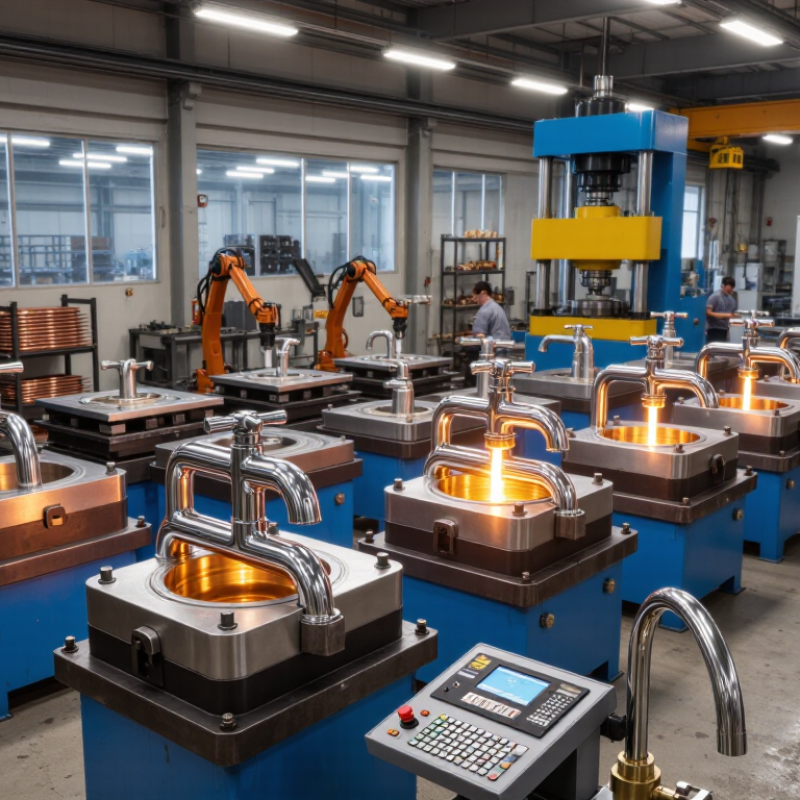
Water Tap Casting Technologies: Gravity, Low-Pressure, and Die Casting Compared
Top 10 Water Tap Casting Machines for Global Buyers
Water Tap Casting Technologies: Gravity, Low-Pressure, and Die Casting Compared
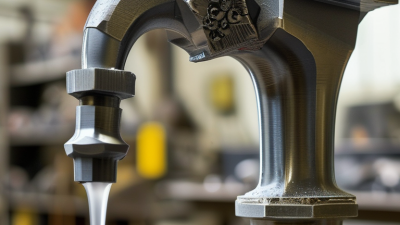
Selecting a water tap casting machine starts with alloy, production volume, and surface expectations. Gravity casting uses a reusable mold filled by natural metal flow. It suits brass taps, simple shapes, and moderate production rates. The equipment is comparatively straightforward, but trapped air may create porosity. Careful vent design and controlled pouring remain essential.
Low-pressure casting pushes molten metal upward through a sealed die. This method offers steadier filling and fewer internal defects than basic gravity casting. It works well for larger tap bodies and complex passages. However, pressure control, sealing quality, and furnace maintenance directly affect results. Small leaks can cause unstable cycles. That detail is easy to underestimate.
Die casting injects molten alloy at high speed and pressure. It delivers thin walls, sharp details, and fast cycle times. For high-volume zinc or suitable aluminum components, it can be highly productive. Tooling costs are higher, and brass applications require careful process evaluation.
Ten machines may look similar in a supplier catalogue, yet clamping force, shot capacity, automation, and cooling design can differ greatly. Buyer inspections should include sample castings, filling records, and dimensional reports.
My own preferred check is simple: cut a finished tap body and inspect its internal structure. Surface appearance alone can mislead.
Even experienced teams sometimes choose speed over repairability. That decision deserves another review.
Key Selection Metrics: Capacity, Cycle Time, Tolerance, and Scrap Rate
Top 10 Water Tap Casting Machines for Global Buyers
Key Selection Metrics: Capacity, Cycle Time, Tolerance, and Scrap Rate
A credible top-ten list should compare production data, not glossy machine photographs. Capacity must match real demand, including setup changes, maintenance, and rejected castings. A machine rated for 1,000 pieces daily may deliver fewer in a busy factory. Ask for verified output under comparable tap designs and alloy conditions.
Cycle time affects labor cost and delivery reliability. Measure melting, pouring, cooling, ejection, and mold change separately. A fast cycle is not always better. Poor cooling can create porosity, distortion, or unsafe thin sections. Dimensional tolerance deserves equal attention. Check thread areas, valve seats, and sealing surfaces with calibrated gauges. A small deviation can cause leakage during assembly.
Scrap rate reveals process discipline. Request trial-run records showing defects by cause, not only one percentage. Compare flashing, incomplete filling, surface marks, and machining loss. Machines with stable temperature control, repeatable pressure, and clear alarm records usually support better consistency. However, supplier figures need independent verification. A factory acceptance test with your own molds is more convincing.
Capacity looks impressive on paper. Reality is messier. Keep spare-part access, operator training, energy use, and local service response in the evaluation. One overlooked metric is recovery after a stoppage. The best machine may not be the fastest; it may restart predictably with less material waste.
Top 10 Water Tap Casting Machines by Output, Automation, and Alloy Compatibility
Top 10 Water Tap Casting Machines for Global Buyers
The best water tap casting machine is not always the fastest one. Output, automation, and alloy compatibility decide its real value. The International Aluminium Institute reported approximately 72 million tonnes of primary aluminium production in 2024, showing the scale of modern alloy processing. However, most tap bodies still require copper alloys, stainless steel, or zinc-based materials. Buyers should compare daily output, cycle time, furnace capacity, and casting stability for each alloy.
High-output machines suit large sanitaryware factories, while smaller cold-chamber or gravity systems offer more flexibility. Automated ladling, mold changing, robotic trimming, and digital temperature control can reduce repetitive labor and casting variation. The International Copper Study Group forecast refined copper usage above 26 million tonnes in 2024, reinforcing demand for copper-based components. Yet copper alloys need careful melting control. Poor temperature management can create porosity, incomplete filling, or excessive scrap.
Alloy compatibility needs practical testing. Brass casting machines should support stable heating and controlled injection pressure. Stainless steel requires stronger thermal systems and more durable molds. Zinc alloys may benefit from shorter cycles and precise die control. ISO 8062 provides useful guidance for casting dimensions and tolerances, but machine brochures rarely show full production evidence. That is a weakness. Request sample castings, scrap-rate records, maintenance intervals, and energy data before purchasing. A machine promising maximum output may underperform with complex tap geometries, recycled feedstock, or frequent alloy changes. Real factories are messier.
Global Compliance Checks: ISO 9001, NSF/ANSI 61, and WRAS Requirements
Top 10 Water Tap Casting Machines for Global Buyers
Global Compliance Checks: ISO 9001, NSF/ANSI 61, and WRAS Requirements
Selecting a water tap casting machine requires more than checking clamping force or cycle time. The finished tap must support traceability, controlled alloys, and repeatable casting quality. The ISO Survey 2023 recorded more than 1.26 million ISO 9001 certificates worldwide, showing how widely quality systems shape industrial purchasing. However, certification alone does not prove safe drinking-water contact.
NSF/ANSI 61 evaluates materials and components that contact drinking water. Buyers should request alloy declarations, coating records, laboratory test reports, and migration-control evidence. WRAS requirements are especially important for products entering the United Kingdom. They focus on water fittings, material suitability, contamination prevention, and installation performance. A casting machine cannot receive drinking-water approval by itself. Its value depends on process controls around the tap body, cartridge housing, and internal channels. Small defects matter. Porosity may trap contaminants or cause leakage after machining.
Tips: Ask suppliers for batch-level traceability, pressure-test records, and calibration certificates. Confirm whether testing covers the exact alloy and surface finish. ISO 9001 is useful, but it is not a substitute for NSF/ANSI 61 or WRAS evidence. Factory audits often uncover incomplete records, even when brochures look impressive. That weakness deserves attention. Allow time for independent testing before mass production.