Engine blocks leave the machining line with edges that can hide sharp burrs, loose chips, and casting residue. These defects may disrupt cleaning, inspection, or assembly. A well-matched Engine Blocks Deburring Machine helps control those risks through repeatable brushing, cutting, or automated finishing. Yet machine names alone prove little. Tool access, block geometry, cycle time, and chip management matter on the factory floor.
The scale is significant, but the data needs careful reading. OICA reported 93.5 million motor vehicles produced worldwide in 2023. That figure describes vehicle output, not engine-block demand; it provides context, not a direct market forecast. For supplier comparisons, buyers should also review demonstrated block trials, surface and edge criteria, changeover time, guarding, service coverage, and spare-part access. LaRoux K. Gillespie, author of the Deburring and Edge Finishing Handbook, is a recognized deburring specialist. In paraphrase, his work emphasizes an important principle: burr removal should be designed into the manufacturing process, not left as cosmetic cleanup. That distinction is easy to miss.
This “China Top 10” overview should therefore be read as a sourcing shortlist, not an automatic ranking. Ask suppliers to process your actual block. Inspect the same edges under consistent lighting. Record cycle time and rework. A polished demonstration is not production evidence. Some claims may sound convincing; the details still need checking. The strongest partner is the one that can show repeatable results, explain its process limits, and support the machine after installation.
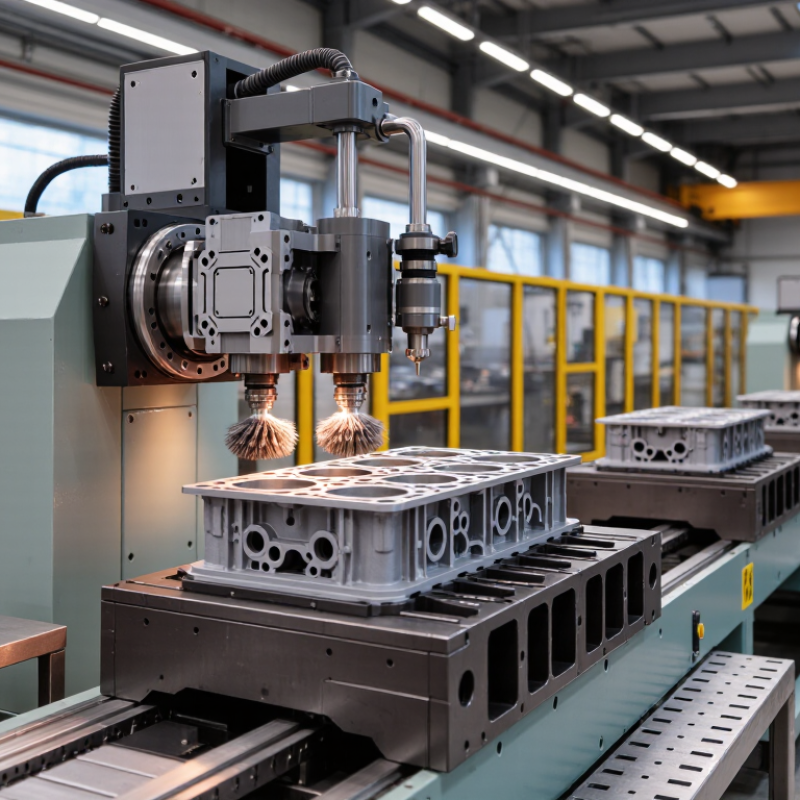
Engine block deburring machines remove sharp edges and loose material left after machining. These details matter. A small burr near an oil passage can affect cleaning, inspection, or later assembly. Around cylinder bores, coolant openings, and deck surfaces, consistent edge treatment helps parts move through production with fewer manual corrections. The goal is not to remove as much material as possible. It is to create controlled, repeatable edges without damaging critical surfaces.
Machine designs vary with block material, geometry, and production volume. A system may use rotating brushes, abrasive tools, or programmed spindles to reach different features. Secure fixturing is essential: even a slight shift can leave one corner unfinished or mark a machined face. Operators typically verify tool condition and inspect sample parts under good lighting. A clean-looking block is not always a finished block.
Automation can improve repeatability, but it is not a cure-all. Tool wear, chip buildup, and awkward internal passages still need attention. In practice, a carefully chosen manual check can reveal what a cycle-time report misses. That extra check takes time. It may also prevent rework. Suppliers are most useful when they can explain how their equipment handles a specific block design, not just quote a maximum output rate.
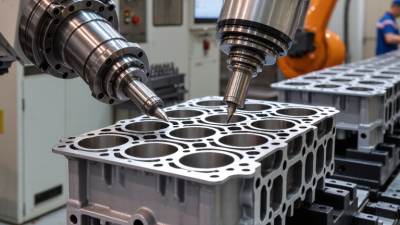
China’s engine-block deburring supplier market is not one uniform group. It includes machine builders, automation integrators, and process-focused workshops; some suppliers cover all three roles. Machine builders may provide the machine frame, spindles, guarding, and controls. Integrators connect those systems with loading robots, conveyors, and inspection stations. Process specialists focus on removing burrs from specific areas, such as oil passages, deck surfaces, and water-jacket openings.
The right supplier depends on the block and the production target. A high-volume line may need automated loading and repeatable tool paths, while a mixed-model plant may value quick fixture changes. Ask how samples are tested, how tool wear is monitored, and how chips or abrasive residue are removed. Small details matter. A clean-looking surface can still hide burrs inside a passage.
Supplier evaluations often involve engineering teams, local sales offices, and export support, with responsibilities that may overlap. Request a trial using representative castings, then review cycle time, coverage, and changeover steps. Check the proposed service plan and spare-parts list, too. A polished demonstration is useful, but it cannot answer every production question. Some requirements only become clear after a few weeks on the shop floor.
China’s engine block deburring suppliers serve a large manufacturing base. OICA reported that China produced about 30.16 million motor vehicles in 2023. IFR’s World Robotics 2024 report recorded 276,288 industrial robots installed in China that year. These figures show the scale of automation demand, but they do not prove any supplier’s machining performance.
Profiles of ten Chinese suppliers may reveal distinct strengths: foundry-line integration, CNC deburring cells, robotic edge finishing, abrasive-belt systems, brush-tool machines, high-pressure cleaning, flexible low-volume setups, heavy-duty cast-iron processing, inspection-linked cells, and retrofit engineering. Their capabilities differ. A foundry integrator may manage rough castings well, while a flexible cell may suit frequent model changes. Small details matter. Ask how each supplier controls burr removal around oil passages, bolt holes, and sealing faces.
Published catalogs rarely show the full operating picture. Request a sample-part trial using your actual casting, then inspect edge quality, cycle time, and surface damage. Also check fixture repeatability, tool life, dust or chip handling, and maintenance access. One weakness in many comparisons is the focus on machine price alone. It can hide setup costs and downtime. Supplier claims deserve verification.
Comparing China’s engine-block deburring suppliers requires more than checking machine speed. Ask how each system handles cast iron and aluminum, where burrs form around oil passages, and how it controls edge consistency. Request a sample run using your own parts. Inspect the edges under magnification, then check whether chips remain in narrow bores. Small details matter. A polished demonstration may not reflect a difficult production shift.
Production capability also depends on changeover time, extraction, and process monitoring. The International Federation of Robotics’ World Robotics 2024 report counted 4,281,585 industrial robots operating worldwide in 2023, up 10% year over year. This signals growing factory automation, but it does not prove a supplier can deliver reliable deburring. Ask for cycle-time records, repeatability results, acceptance-test criteria, and evidence from comparable parts. Check service response times, operator training, spare-part availability, and whether technicians can support commissioning. Claims are easy. Verifiable records are better, though they still cannot predict every plant condition.
Tips Compare suppliers using the same block, burr locations, and acceptance limits. Record cycle time and rework after repeated runs. Ask who maintains brushes and extraction filters. A small omission here can become a real production problem.
China Top 10 Engine Block Deburring Machine Suppliers
Choosing a Chinese supplier starts with the engine block, not the brochure. Share drawings, alloy details, burr locations, and expected production volume. Ask how the machine handles internal oil passages, split-line flash, and edges around threaded holes. Details matter. A suitable supplier should explain its tooling choices and show how part variation affects the process.
Request a sample trial using your own castings. Check edge consistency under good lighting, then inspect difficult areas with a magnifier. Ask for cycle-time records, changeover steps, and measurements from repeated runs. Ask to see data. A polished demonstration is useful, but it may not reflect a dusty production shift or worn tooling. Discuss extraction, guarding, noise, and access for routine maintenance. Confirm which components are standard and how quickly replacement parts can be supplied.
Evaluate the engineering response as carefully as the machine. Do technical questions receive specific answers, or just reassuring promises? Review acceptance criteria, drawings, operating instructions, and training plans before placing an order. If possible, speak with users running similar blocks and production rates. One limitation: a checklist can still miss a small fit issue, so keep time for installation checks and operator feedback. A clear process for correcting defects matters as much as the initial quotation.
Supplier evaluation framework: the factors below are suggested comparison criteria, not a ranking of named companies. Weights are indicative and total 100%.
| No. | Evaluation factor | What to assess | Evidence to request | Suggested weight |
|---|---|---|---|---|
| 1 | Deburring process capability | Ability to remove burrs and sharp edges from the specified engine-block features, such as drilled passages, ports, and machined faces, without damaging functional surfaces. | A process proposal based on your part drawings, critical-feature list, and sample parts; documented before-and-after inspection results. | 18% |
| 2 | Part and material compatibility | Suitability for the actual block material, geometry, dimensions, machining condition, and product mix. Cast iron and aluminum parts may require different process settings and tooling. | A written compatibility review, workholding concept, process limits, and trial results using representative parts. | 14% |
| 3 | Automation and production integration | Fit with the required loading method, cycle time, part transfer, operator interaction, and upstream or downstream equipment. Confirm how changeovers and part identification are handled. | Layout drawing, cycle-time breakdown, interface list, and demonstration of the proposed loading and changeover sequence. | 10% |
| 4 | Quality control and process consistency | Repeatability of deburring results, control of material removal, and prevention of residual burrs, loose particles, or surface damage across production runs. | Inspection plan, acceptance criteria, sample measurement records, and details of any in-process monitoring or error detection. | 12% |
| 5 | Sample testing and acceptance trials | Willingness and ability to run trials with customer parts and agree on measurable acceptance requirements before equipment approval. | A trial protocol specifying sample quantity, critical features, inspection method, cycle-time measurement, and how test results will be recorded. | 10% |
| 6 | Machine safety and environmental controls | Appropriate guarding, interlocks, emergency-stop access, chip and dust management, noise considerations, and—where applicable—fluid containment and filtration. | Risk assessment, safety-component documentation, maintenance access details, and information on dust or fluid handling. | 8% |
| 7 | Service, training, and spare parts | Availability of installation support, operator and maintenance training, troubleshooting assistance, and replacement parts for wear items and critical components. | Service response commitments, training agenda, spare-parts list, warranty terms, and escalation procedure. | 8% |
| 8 | Manufacturing and delivery readiness | Realistic project scheduling, assembly and test capacity, packaging arrangements, and ability to provide progress updates against agreed milestones. | Project schedule, milestone definitions, factory acceptance test plan, packing specification, and shipment documentation checklist. | 7% |
| 9 | Customization and documentation | Capacity to adapt fixtures, tooling, controls, and machine layout to the production requirement, with clear operating and maintenance documentation. | Scope-of-supply list, drawings, electrical and pneumatic documents, manuals, and a record of agreed design changes. | 7% |
| 10 | Total cost of ownership and commercial clarity | Compare more than purchase price: include tooling and consumables, utilities, maintenance, training, shipping, installation, and the stated warranty scope. | Itemized quotation, payment and delivery terms, consumables estimate, warranty exclusions, and a list of buyer-supplied items. | 6% |
| Total suggested evaluation weight | 100% | |||