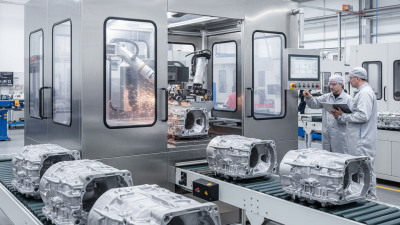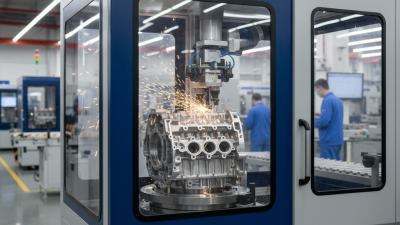
Choosing an Engine Blocks Deburring Machine is a production decision, not a simple equipment purchase. Modern engine blocks contain deep galleries, sharp parting lines, and difficult-to-reach internal edges. Each feature can affect tool access, cycle time, coolant flow, and final cleanliness. The right machine must remove burrs consistently without damaging sealing surfaces or enlarging precision bores.
Industry data shows why this decision deserves careful analysis. The International Federation of Robotics reported 135,461 industrial robots installed in automotive manufacturing worldwide during 2023. This high level of automation increases pressure for stable, repeatable deburring results. However, automation alone does not guarantee quality. A poorly matched brush, spindle, or fixture can leave aluminum flakes inside an oil passage. That small failure may become a major assembly problem.
A reliable evaluation should examine material, burr formation, production volume, and inspection requirements together. ISO 16232 provides recognized methods for measuring particulate cleanliness in road-vehicle components. ISO 21920 also supports standardized surface-texture evaluation, which helps engineers define measurable finishing expectations. These standards do not select the machine for you. They create a stronger basis for comparison.
In practical trials, inspect bore mouths, deck faces, water-jacket openings, and threaded holes under consistent lighting. Measure cycle time, edge condition, media wear, noise, and operator access. Do not judge performance from one clean sample. Repeatability matters more.
There is no universal winner. A high-speed system may reduce labor but increase maintenance complexity. A simpler machine may offer better control for variable casting designs. This guide explains how to compare these trade-offs and select an Engine Blocks Deburring Machine with evidence, not assumptions. Some decisions will remain imperfect. That is normal. The goal is controlled risk and dependable production.
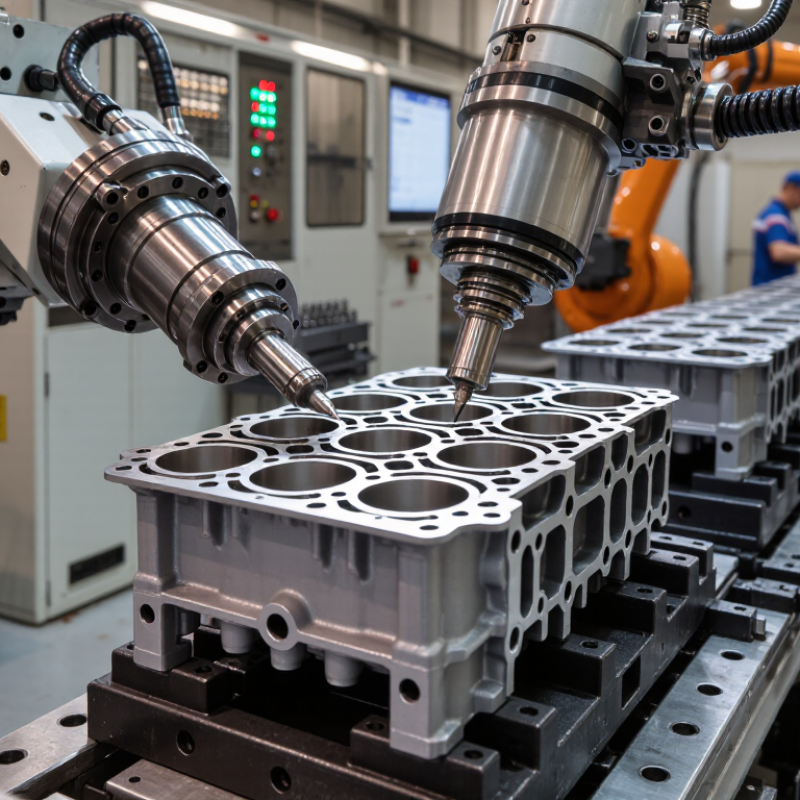
How to Choose an Engine Blocks Deburring Machine?
Engine block burrs require classification before machine selection. Edge burrs appear along parting lines, ports, and machined faces. Hole burrs form around oil galleries, coolant passages, and bolt holes. Residual burrs below 0.1 mm are smaller, but they can still detach during assembly. ISO 13715:2019 provides a useful framework for defining unspecified edge conditions and burr limits.
A practical inspection combines visual checks, magnification, and tactile testing. For critical holes, use a calibrated microscope or digital vision system. Measure burr height at several points, not only the easiest location. In production trials, abrasive brushing can remove edge burrs efficiently, while flexible tools suit intersecting passages. Deep galleries need controlled access and verified cleaning. A clean-looking part can still fail.
Machine selection should match material, geometry, and required repeatability. Aluminum blocks may need lower pressure to prevent surface smearing. Cast iron produces harder, darker residual fragments. Deloitte’s 2024 Smart Manufacturing Survey found that 92% of surveyed leaders view smart manufacturing as essential for competitiveness. That supports choosing equipment with recipe control, force monitoring, and inspection records. However, automation does not replace process validation. A machine may achieve a 0.1 mm target on one casting, then miss it after tool wear. Check cycle stability across multiple batches. Keep the data visible.
Choosing an engine block deburring machine starts with output, not a catalog number. Define the required range first: 20 to 120 blocks per hour. At 20 blocks hourly, the available cycle is about three minutes per block. At 120 blocks, it falls to only 30 seconds. That difference changes the machine design, loading method, tool arrangement, and operator workload.
A practical capacity check must include real production losses. Loading, unloading, tool changes, inspection, and minor stoppages reduce the advertised rate. A machine rated for 120 blocks per hour may deliver only 90 in a demanding shift. Experienced production engineers often plan around 75–85% effective utilization. This is not a perfect formula, but it provides a safer starting point.
Measure block weight, casting variation, burr thickness, and the number of edges requiring treatment. A heavy block may need slower handling.
For low-volume production, a flexible machine with quick setup can be more valuable than maximum speed. It should handle different block sizes without long changeovers.
For continuous production, automatic feeding and stable cycle control become more important.
During factory trials, inspect oil passages, bolt holes, sealing faces, and difficult internal corners. These areas often reveal missed burrs. Ask for cycle-time records using your actual blocks, not sample parts selected for convenience.
I have seen capacity estimates fail because operators were excluded from the calculation. Leave room for training, maintenance, and quality checks. Speed alone does not create dependable output.
Engine blocks need different deburring methods because burrs hide inside oil galleries, coolant passages, and intersecting holes.
Brushing is practical for light burrs and accessible edges. It offers low tooling complexity and gentle contact. However, brush wear can change edge quality during a long production shift.
A 2024 Deloitte manufacturing survey found that 86% of executives view smart manufacturing as important for competitiveness. That supports process monitoring, not blind automation.
Milling suits heavy parting-line burrs and precise sealing faces. It provides controlled geometry but may increase cycle time and tool consumption. Use it when datum accuracy matters.
Thermal deburring reaches internal passages that brushes cannot touch. The process is fast and comprehensive, yet heat-sensitive coatings, oxidation, and gas safety require careful validation.
The U.S. Department of Energy’s Manufacturing Energy and Carbon Footprint report identifies process heating as roughly half of industrial manufacturing energy use. Thermal treatment therefore deserves an energy review.
High-pressure water removes loose chips and burr fragments from deep passages. It works well after machining, especially when cleanliness is critical. Still, pumps, filtration, wastewater handling, and corrosion control add operating demands.
ISO 16232 emphasizes measured cleanliness for automotive components, including particle size and mass.
I would not choose a machine from cycle time alone. Check burr location, alloy, hole geometry, pressure limits, and inspection results. A pilot test often reveals an uncomfortable truth: the fastest process may leave the most expensive residue.
Choosing an engine block deburring machine starts with measurable edge quality, not attractive cycle-time claims. Specify an edge tolerance of ±0.05 mm, then verify it on machined samples. This limit helps protect gasket seating, oil passages, and assembly clearances. A 0.08 mm burr may look harmless under shop lighting. It can still create contamination or uneven contact.
Surface finish deserves equal attention. Require Ra 1.6–3.2 µm after deburring, measured with a calibrated profilometer. ISO 21920-2:2021 defines current rules for profile surface-texture evaluation, including measurement conditions and reporting.
Use the same cutoff length, tracing direction, and filtering method during supplier acceptance. Otherwise, two “Ra 2.0 µm” results may not represent the same surface. That is an easy mistake.
Ask for capability data from at least 30 consecutive parts. Review average, standard deviation, and Cpk, rather than accepting one perfect sample. A practical target is Cpk ≥1.33 for the ±0.05 mm requirement, although your process risk may demand more. Check cast aluminum and iron blocks separately. Tool wear, coolant, casting hardness, and fixture distortion can change the result.
Industry quality guidance, including AIAG’s Measurement Systems Analysis reference, stresses validating the measurement system before judging process capability. I would also inspect bore entrances at 10× magnification. Human inspection alone is inconsistent. The machine should prove repeatability under real production conditions, not laboratory conditions.
Choosing an engine block deburring machine starts with the casting, not the catalog. Inspect oil passages, water jackets, and narrow deck corners before comparing features. A practical trial should use your actual aluminum or iron blocks. Watch whether the cutter follows each edge without leaving burrs or fresh scratches.
Automation matters when production varies during the shift. Look for reliable loading, part detection, recipe storage, and automatic tool compensation. A system that stops after one sensor fault may protect parts, but it can also waste hours. That trade-off deserves measurement.
Record cycle time, operator touches, and rejected parts across several batches.
Tool life needs more than a supplier’s estimate. Measure edge quality as tools wear, especially around hard-to-reach passages. Ask how quickly operators can inspect, change, and calibrate the cutter.
Safety checks should cover guarding, door interlocks, chip control, noise, and maintenance access. Do not judge safety from a clean demonstration cell. Inspect the machine after chips accumulate.
For complex blocks, 3-axis access may miss underside features or angled ports. Four or five axes can improve tool approach, but added motion increases programming demands. Run a full block simulation and verify collision limits before approval.
I once trusted a smooth sample cycle too quickly. It hid a difficult rear passage. That mistake changed our evaluation checklist.