Choosing the right Cnc Castings manufacturer can shape product quality, delivery stability, and long-term production costs. Global buyers often compare suppliers by more than price. They examine machining capacity, casting methods, material control, inspection systems, and export experience. This guide introduces ten Chinese manufacturers with strong relevance for international sourcing projects.
The selection focuses on practical evidence. Key points include factory capabilities, CNC equipment, alloy options, surface finishing, dimensional inspection, and quality documentation. Some suppliers serve automotive programs, while others support pumps, industrial machinery, energy equipment, or custom engineering parts. Certifications such as ISO 9001 may support credibility, but certificates alone cannot prove consistent performance. Sample reports, process records, and customer communication still matter.
Details can reveal more.
A reliable supplier should explain how it controls shrinkage, porosity, surface defects, and machining tolerance. Buyers should also review production photos, inspection tools, packaging methods, and realistic lead times. A clean workshop is useful evidence, though it does not guarantee every batch will perform perfectly. This is where careful verification remains necessary. In some cases, public information is incomplete or differently presented, so readers should confirm current equipment and certification status directly with each manufacturer. That small step can prevent costly misunderstandings.
The companies discussed here represent different strengths rather than one universal ranking. Some may offer better support for complex prototypes, while others may handle repeat orders and larger volumes more efficiently. Technical drawings, material specifications, testing requirements, and delivery terms should be agreed before production begins. With measured comparison and direct communication, global buyers can identify a Cnc Castings partner that fits their application, quality expectations, and purchasing strategy.
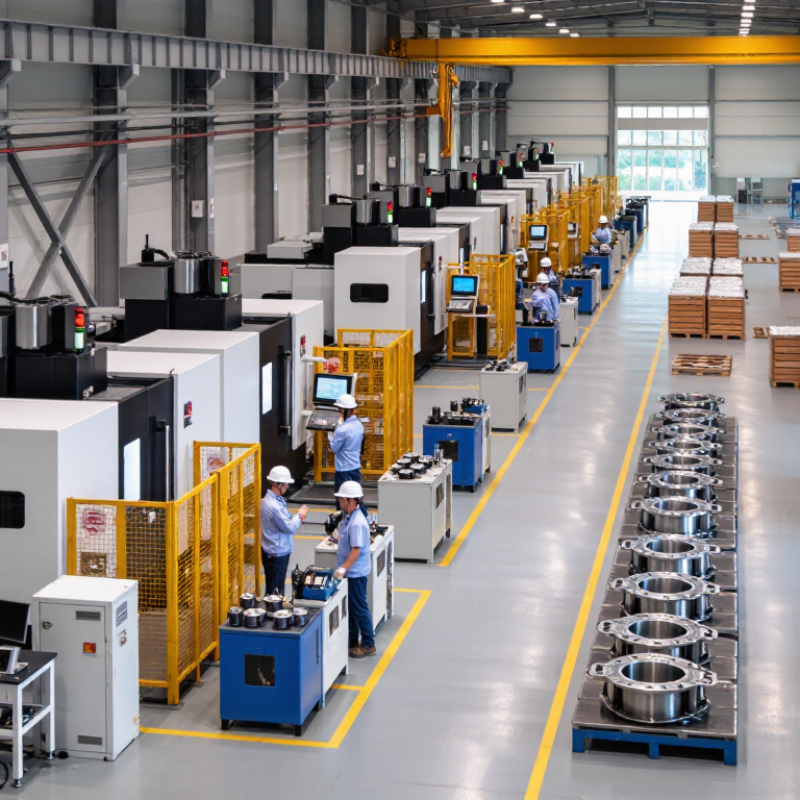
What CNC Castings Are and Why They Matter in Global Manufacturing
CNC castings combine metal casting with computer-controlled machining. Molten metal first fills a designed mold. After cooling, CNC equipment removes excess material and creates precise holes, faces, and threads. This process supports complex shapes at practical production costs. It also reduces manual variation between batches. In global manufacturing, consistent castings can simplify assembly, maintenance, and inventory planning. A housing with uneven mounting holes can delay an entire production line.
For buyers, quality depends on more than a smooth surface. Check the alloy grade, casting method, machining tolerance, and inspection process. Material certificates and dimensional reports should match the shipment. Ask how workers control porosity, cracks, warping, and tool wear. A polished part may still hide internal weakness. That is an easy mistake. Reliable communication also matters across time zones. Clear drawings, revision control, and sample approval prevent avoidable disputes. Still, no process is perfect. Design changes and rushed schedules can create small gaps between expectations and production.
Tips: Request a first-article sample before placing a large order. Compare critical dimensions with your own measuring equipment. Confirm packaging protects machined surfaces from moisture and impact. Keep one approved sample for future reference. Small checks matter.
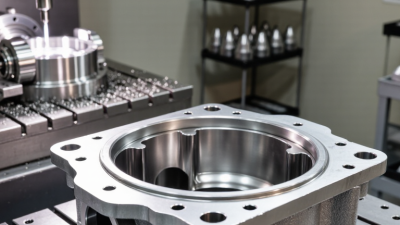
A practical, company-neutral reference table for evaluating CNC-machined castings, casting processes, materials, quality requirements, and global sourcing considerations.
| No. | Evaluation Dimension | Verified Industry Fact | Typical Data or Range | Why It Matters to Global Buyers |
|---|---|---|---|---|
| 1 | Definition of CNC Castings | CNC castings are cast metal components that receive secondary machining on computer-controlled milling, turning, drilling, or boring equipment. | Casting forms the near-net shape; CNC machining produces accurate functional surfaces, holes, threads, and datums. | This combination can reduce material waste while achieving tighter dimensional control than casting alone. |
| 2 | Casting Process Capability | Common processes include sand casting, investment casting, permanent-mold casting, and high-pressure die casting. | Sand casting suits large or lower-volume parts; investment casting suits complex shapes; die casting suits repeat production of thin-walled non-ferrous parts. | The process affects tooling cost, minimum order quantity, surface finish, wall thickness, and achievable geometry. |
| 3 | Common Metal Materials | Frequently used casting alloys include aluminum, ductile iron, gray iron, carbon steel, stainless steel, copper alloys, and zinc alloys. | Aluminum density is approximately 2.7 g/cm³; iron-based alloys are commonly around 7.1–7.9 g/cm³. | Material selection influences weight, strength, corrosion resistance, machinability, thermal performance, and total cost. |
| 4 | Dimensional Accuracy | Casting tolerances and CNC machining tolerances are separate requirements and should be specified independently on technical drawings. | CNC-machined features are often specified in the hundredths of a millimeter, while as-cast tolerances are generally looser and process-dependent. | Clear tolerance allocation prevents unnecessary machining, disputes, and avoidable production costs. |
| 5 | Surface-Finish Requirements | Casting produces a process-specific surface texture; machining, grinding, blasting, polishing, anodizing, plating, or coating can improve functional or cosmetic performance. | Machined surfaces are commonly controlled by Ra values; the required Ra depends on sealing, sliding, fatigue, and appearance needs. | Correct surface specifications support sealing, wear resistance, paint adhesion, and consistent visual quality. |
| 6 | Internal Soundness | Casting defects may include shrinkage porosity, gas porosity, inclusions, cold shuts, misruns, and hot cracks. | Inspection methods may include visual inspection, dimensional inspection, dye penetrant, magnetic-particle, ultrasonic, or radiographic testing. | Defect-control requirements are essential for pressure-bearing, safety-critical, fatigue-loaded, and sealed components. |
| 7 | Quality Management | ISO 9001 is a quality-management-system standard; it does not by itself guarantee a specific part tolerance or material grade. | A robust quality plan normally includes inspection procedures, calibration control, traceability, nonconformance handling, and final inspection records. | Documented processes make supplier performance easier to audit and compare across international projects. |
| 8 | Inspection and Measurement | Coordinate measuring machines, height gauges, calipers, micrometers, gauges, and optical systems are commonly used according to feature size and accuracy needs. | Inspection equipment should be calibrated and suitable for the drawing tolerance being verified. | The right measurement method reduces false acceptance, false rejection, and disagreements between buyer and supplier. |
| 9 | Production Economics | Total landed cost includes tooling, casting, CNC machining, finishing, inspection, packaging, freight, duties, and possible rework. | High-volume parts may justify dedicated tooling; low-volume parts may favor flexible tooling or processes with lower initial investment. | Evaluating total cost rather than piece price improves sourcing decisions and reduces hidden expenses. |
| 10 | Export and Supply-Chain Readiness | International orders require controlled drawings, agreed revision levels, packaging specifications, commercial documents, and a defined delivery term such as Incoterms®. | Typical documentation may include material certificates, inspection reports, certificates of conformity, packing lists, and shipping invoices. | Clear documentation and packaging reduce customs delays, transit damage, quality disputes, and production interruptions. |
China’s CNC casting industry serves international buyers through integrated casting, machining, inspection, and export support. Many factories handle aluminum, iron, steel, and selected copper alloys. Their teams convert drawings into process plans, then use CNC equipment to refine critical surfaces.
A reliable project usually begins with a technical review. Engineers check wall thickness, machining allowances, datum points, and difficult internal features. Buyers should request material certificates, dimensional reports, and sample approval before mass production. On the shop floor, inspectors may use calipers, coordinate measuring machines, and surface gauges. Measurements matter most at connection points, holes, and sealing areas.
Communication also shapes the buying experience. Clear drawings, revision numbers, packaging details, and delivery terms reduce avoidable disputes. Export teams commonly prepare invoices, packing lists, and shipping documents for overseas customers. Still, not every quotation is precise. A low initial price may exclude tooling, inspection, or protective packaging. Ask questions early.
Small errors become expensive later. A casting can meet its drawing but fail during assembly because a mating part was misunderstood. I have seen this risk reduced by sharing 3D models, photographs, and first-article feedback. Production can be fast. Verification should not be rushed. Some suppliers are strong in complex castings but weaker in documentation, while others provide excellent reports but limited material options. International buyers need to assess both capabilities and consistency, not price alone.
Selecting China’s top CNC casting manufacturers requires more than comparing prices. Global output exceeds 100 million tonnes annually, according to the 2023 World Casting Census. That scale makes supplier verification essential. Buyers should examine casting methods, machining capacity, alloy control, and export experience. A reliable factory can provide heat numbers, material certificates, and inspection records. Ask for CMM reports, not only dimensional claims. Check critical holes, flatness, and surface defects on actual samples.
Quality systems deserve equal attention. ISO 9001 certification supports controlled processes, but it does not guarantee every part is consistent. Review corrective-action records, calibration schedules, and traceability from furnace to shipment. The International Organization for Standardization reports that ISO 9001 remains the world’s most widely used quality-management standard, with more than one million certificates globally. Capacity should be tested against real demand. Confirm monthly machine hours, backup equipment, tooling ownership, and average lead times. Small details matter.
Cost comparisons also need practical testing. A low quotation may exclude tooling maintenance, secondary machining, packaging, or inspection. Request a pilot order with clear acceptance limits and independent testing where necessary. Supplier communication is another measurable criterion; delayed engineering replies can become expensive production delays. I would not assign every manufacturer a perfect score. Even experienced factories may show uneven documentation or slower prototype support. That weakness deserves discussion, not concealment. Evaluate evidence, visit production when possible, and reassess performance after several shipments.
Suggested buyer-screening weights for evaluating CNC casting suppliers. The framework focuses on technical capability, quality control, delivery reliability, and international purchasing requirements rather than individual company data.
The total weighting is 100%. Buyers can adjust the percentages according to part complexity, material requirements, production volume, and target market regulations.
China’s top ten CNC casting manufacturers serve different industrial needs. Their profiles often divide into automotive, hydraulic, energy, robotics, and medical-equipment specialists. Some operate automated molding lines, while others focus on low-volume prototypes. This difference matters.
The strongest automotive supplier profile combines aluminum die casting, five-axis machining, and in-line dimensional inspection. A hydraulic-component producer usually emphasizes ductile iron, pressure testing, and stable wall thickness. Several aerospace-oriented factories use vacuum casting, controlled heat treatment, and full material traceability.
Their workshops commonly include coordinate measuring machines, spectrometers, and digital production records. Still, equipment alone proves little. Operator experience affects porosity control, tool wear, and final surface quality.
China Foundry Association data places China’s annual casting output above 50 million tonnes in recent years, showing the depth of its manufacturing base. Fortune Business Insights estimated the global metal casting market at about 151 billion U.S. dollars in 2023, with continued growth expected through 2032. These figures explain the broad supplier range. One of the ten profiles may offer rapid sampling, while another provides long-run consistency for global buyers.
A reliable factory should disclose alloy standards, inspection frequency, rejection rates, and corrective-action records. Some supplier profiles remain less transparent than they appear online. That deserves careful review.
Experienced buyers should request trial parts, process-flow documents, and packaging photographs. They should also compare machining tolerance data against the drawing, not marketing claims. A perfect profile is rare. Capability must be verified.
Global buyers should compare suppliers through evidence, not attractive quotations. The 2024 World Casting Census reported China as the largest casting producer, exceeding 50 million tonnes annually. Scale matters, but it does not guarantee stable CNC accuracy or delivery.
Request sample inspection reports, material certificates, process flowcharts, and recent export references. Check tolerance results from a coordinate measuring machine. Ask whether the supplier controls casting, heat treatment, machining, and final inspection internally. A clear answer is valuable. Vague promises are not. Compare at least three quotations using the same drawings, alloy grade, tolerance, surface finish, packaging, and delivery terms. The cheapest offer may hide tooling costs, higher rejection rates, or weak communication. I have seen buyers focus heavily on unit price and overlook inspection charges. That mistake becomes expensive later.
Tips: Send one controlled drawing package. Mark critical dimensions clearly. Ask for a first-article inspection before mass production. Confirm sampling levels and corrective-action timing in writing. Use a small trial order when risk remains. Do not rely only on factory photographs.
Before placing an order, confirm Incoterms, payment milestones, intellectual-property controls, and ownership of tooling. The supplier should provide a realistic production schedule, not an optimistic promise. Independent pre-shipment inspection can verify quantity, dimensions, labeling, and packaging. Still, inspection has limits. It cannot repair a poor casting design or unclear specification. Reflect on that before signing.