- Home
- Products
- Why Choose Us
- About Us
- News
- Blog
- Contact Us
leave a message
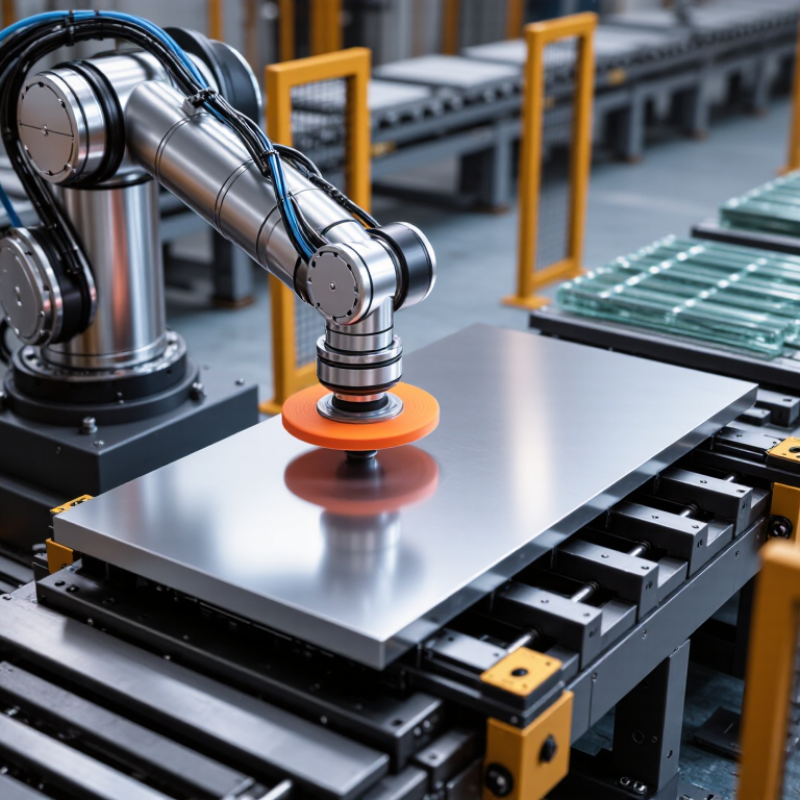
What Is an Automated Polishing System? It is a coordinated production solution that uses robots, polishing tools, sensors, and software to finish surfaces with controlled pressure and repeatable motion. Instead of relying entirely on manual handling, the system guides abrasive wheels, belts, or pads across a defined workpiece. Stainless-steel panels, aluminum components, glass edges, and precision castings can all require this process.
Professor David A. Dornfeld’s manufacturing philosophy provides a useful reminder: “Automation should improve process control, not merely replace labor.” That principle fits polishing well. A robotic arm may follow the same path repeatedly, while sensors monitor contact force, vibration, and tool wear. The result can be a more consistent gloss level and fewer visible swirl marks. It can also reduce operator exposure to dust, noise, and repetitive wrist movements.
Repeatability matters.
However, an Automated Polishing System is not automatically perfect. Poor fixture design can allow a part to shift by only a few millimeters. That small movement may create uneven edges or dull patches. Incorrect abrasive selection can produce excessive heat, scratches, or a finish that looks acceptable under factory lighting but fails under inspection lamps. Calibration also needs attention. Even advanced equipment depends on accurate recipes, clean tooling, and skilled supervision.
This guide examines the system’s components, operating stages, benefits, limitations, and practical selection criteria. It also considers where automation improves quality and where human judgment remains necessary. The technology is powerful, but it still needs thoughtful engineering.
What Is an Automated Polishing System?
Definition and Purpose of an Automated Polishing System
An automated polishing system is a machine setup that smooths and finishes surfaces with limited manual handling. It typically combines robotic movement, polishing tools, force control, and programmable software. The system follows defined paths across materials such as metal, stone, glass, or engineered components. Its purpose is to improve surface consistency, reduce repetitive labor, and maintain predictable finishing results.
In practical use, an operator loads a workpiece and selects a programmed polishing sequence. Sensors may detect position changes or uneven contact. Controlled pressure helps prevent deep scratches, edge damage, and excessive material removal. A dust extraction unit can also improve workplace visibility and cleanliness. However, automation is not flawless. Complex shapes may still require skilled adjustments, especially when surfaces vary between batches. A technician should inspect gloss, roughness, edges, and tool wear instead of trusting the program blindly.
Tips: Calibrate pressure before production. Test the process on a sample piece. Record abrasive life and finishing results. Keep inspection standards clear. Small changes matter.
A reliable system depends on more than robotic motion. Proper fixture design prevents vibration. Stable tooling supports repeatable contact. Clear maintenance records make faults easier to trace. In my experience, the best results come from combining measured data with operator judgment. Some programs look efficient but need refinement after real production begins. That reflection should guide future adjustments, not be treated as failure.
| System Dimension | Definition or Typical Data | Purpose | Measurable Output | Common Applications |
|---|---|---|---|---|
| Core Definition | A programmed machine system that removes surface imperfections and produces a specified finish with limited manual intervention. | To make polishing operations repeatable, controlled, and suitable for consistent production. | Consistent surface appearance and reduced variation between workpieces. | Metal, plastic, glass, ceramic, and composite components. |
| Motion Control | Uses programmable axes, robotic joints, or automated linear mechanisms to control tool and workpiece movement. | Maintains a controlled polishing path over flat, curved, or complex surfaces. | Position accuracy, path repeatability, travel speed, and cycle consistency. | Enclosures, molded parts, machined components, tubes, and formed surfaces. |
| Polishing Tool | Abrasive belt, wheel, disc, brush, pad, or buffing tool selected according to the material and required finish. | Performs material removal, blending, deburring, or final gloss polishing. | Abrasive grade, tool speed, contact time, and material removal rate. | Stainless steel, aluminum, nickel alloys, engineered plastics, and glass. |
| Force Control | A mechanical or sensor-based system regulates the pressure between the polishing tool and the workpiece. | Compensates for dimensional variation and helps prevent over-polishing or surface damage. | Applied force, pressure stability, defect rate, and surface uniformity. | Curved parts, castings, welded assemblies, and components with variable tolerances. |
| Surface Finish | The resulting roughness and visual appearance after polishing, commonly evaluated by roughness measurements and visual inspection. | Achieves the surface specification required for appearance, sealing, cleaning, friction, or further processing. | Surface roughness values such as Ra, gloss level, scratch visibility, and reflectivity. | Decorative panels, hygienic equipment, precision parts, and optical surfaces. |
| Process Parameters | Typical adjustable settings include tool speed, feed rate, contact force, abrasive grade, dwell time, and tool angle. | Allows the process to be matched to the material, geometry, and required finish. | Cycle time, removal consistency, energy use, consumable wear, and defect frequency. | High-mix production and repeatable batch manufacturing. |
| Workpiece Handling | Fixtures, clamps, positioners, conveyors, or loading systems hold and present parts to the polishing tool. | Ensures stable positioning and supports repeatable loading and unloading. | Loading time, positioning accuracy, fixture changeover time, and handling errors. | Small components, large panels, batches of identical parts, and heavy workpieces. |
| Inspection and Feedback | Sensors, cameras, force monitoring, or operator checks evaluate the process and finished surface. | Detects defects and supports automatic or operator-led process adjustments. | Defect detection rate, dimensional conformity, roughness readings, and rejection rate. | Quality-sensitive production and processes requiring traceable inspection. |
| Productivity | Automation can perform programmed polishing cycles with reduced dependence on continuous manual handling. | Increases throughput and makes production capacity easier to plan. | Parts per hour, cycle time, equipment utilization, and overall equipment effectiveness. | Medium- and high-volume manufacturing environments. |
| Worker Safety | Enclosures, guarding, dust extraction, interlocks, and controlled operation reduce direct exposure to process hazards. | Reduces exposure to abrasive dust, sparks, noise, vibration, and repetitive manual work. | Incident frequency, airborne contaminant levels, noise exposure, and ergonomic risk. | Grinding and polishing areas requiring controlled working conditions. |
| Primary Purpose | To deliver a repeatable surface treatment process with controlled quality, predictable production time, and improved workplace conditions. | Balances finish quality, productivity, operating cost, and safety. | Stable quality, lower variation, reduced rework, and more predictable output. | Manufacturing operations where consistent polishing results are important. |