

Outdoor cutting tools fail gradually, then all at once: a mower blade starts tearing grass, pruning shears crush stems, and soil abrasion quietly strips away the edge profile. Garden tool grinding is not just a workshop chore; it is a performance and risk-control process for farms, nurseries, orchards, and landscaping crews. In harsh outdoor conditions, silica-rich soil, moisture, acidic sap, and repeated impact can rapidly dull steel hardened to typical tool ranges. This article explains why precise edge geometry matters, how grinding, honing, deburring, and profiling work together, and why scheduled maintenance can reduce cutting force, protect plant health, and extend equipment service life.
Why Garden Tool Grinding Matters
Garden tool grinding is a critical maintenance protocol for agricultural, horticultural, and commercial landscaping operations. Maintaining precise edge geometry on carbon and stainless steel implements is essential for operational longevity, fuel efficiency in mechanized equipment, and environmental resilience.
Cutting Efficiency and Productivity
The mechanics of cutting dictate that a refined edge requires significantly less force to sever plant fibers. When pruning shears, loppers, or rotary mower blades are properly ground, the required cutting force drops by 30% to 40% compared to a dulled edge. This reduction minimizes manual operator fatigue and prevents premature wear on hydraulic systems or mechanical power take-off (PTO) drives in heavy groundskeeping machinery.
Clean incisions are also biologically imperative for long-term plant health. Jagged or crushing cuts caused by blunt edges increase the exposed surface area for pathogen ingress. In commercial orchards and viticulture, using poorly ground tools has been shown to elevate vascular disease transmission rates by an estimated 15% to 25%, making edge maintenance a direct contributor to crop yield and aesthetic quality.
Outdoor Conditions That Dull Tools
Outdoor environmental variables inflict severe mechanical and chemical wear on tool steel, far exceeding the degradation seen indoors. Soil composition is a primary culprit: the silica prevalent in dirt and sand possesses a Mohs hardness of 7. When this silica impacts standard garden tools—typically hardened to between 52 and 58 HRC (Rockwell Hardness Scale C)—it causes rapid micro-abrasion and edge rolling.
Moisture and acidic plant resins further accelerate edge degradation through corrosion and oxidation. Over a standard 40-hour work week, a commercial mower blade operating in sandy, damp conditions can lose up to 0.5mm of its cutting edge profile. This accelerated wear necessitates rigorous, highly scheduled grinding intervals to prevent the steel from degrading past the point of viable restoration.
What Proper Tool Grinding Includes
Comprehensive edge restoration requires more than mere material removal—it demands a systematic approach to reshaping the steel while preserving its core metallurgical properties. Professional garden tool grinding encompasses several distinct phases, each using specific abrasive compounds and techniques to achieve the desired micro-geometry.
Grinding, Honing, Deburring, and Edge Profiling
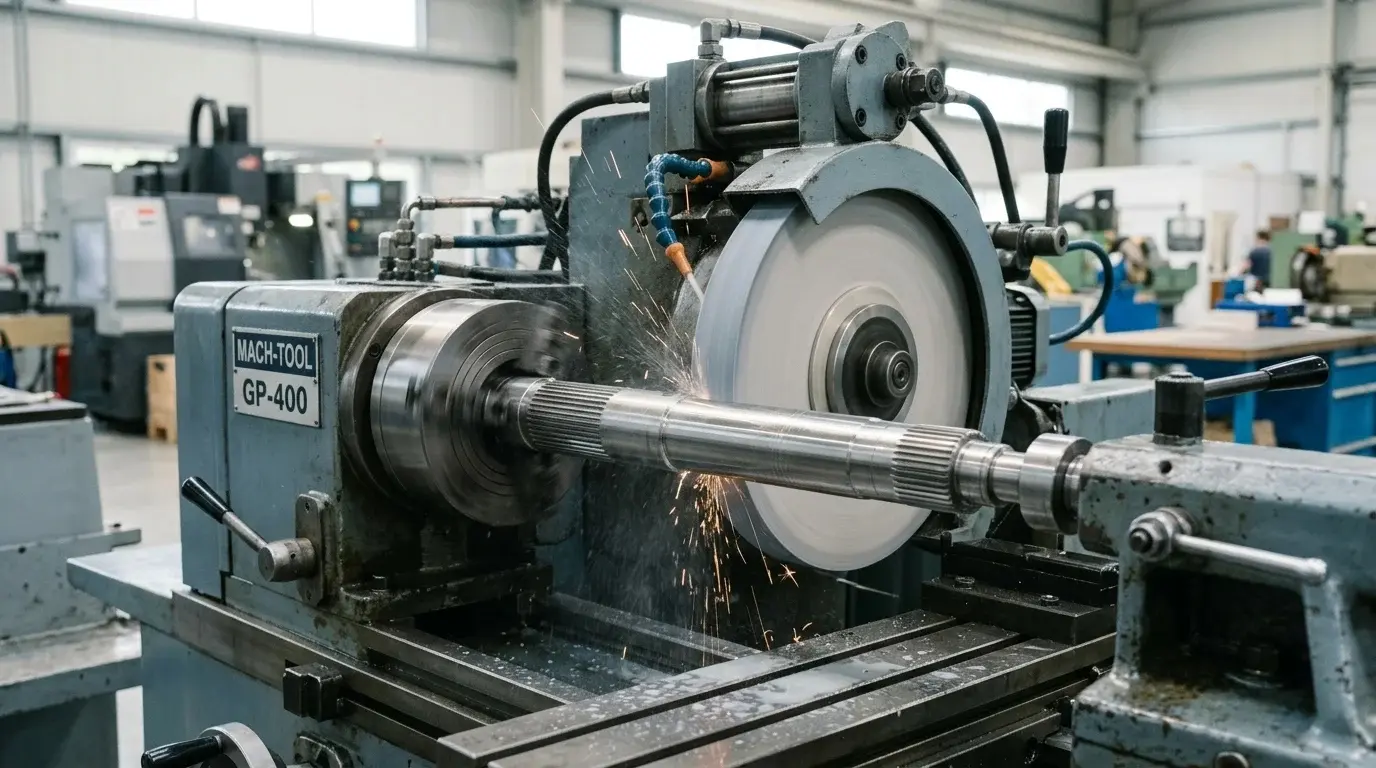
The restoration cycle begins with rough grinding to eliminate heavy nicks and re-establish the primary bevel, typically using 36- to 80-grit abrasives. Once the primary geometry is restored, honing follows. Honing employs finer abrasives, ranging from 220 to 1000 grit, to polish the bevel and refine the apex, reducing friction during the cut.
This sequence often creates a microscopic wire edge or burr, which must be removed through deburring. This is usually achieved via leather stropping, buffing wheels, or fine ceramic rods. Edge profiling, the final consideration, involves customizing the bevel architecture (such as flat, hollow, or convex grinds) to match the specific structural demands and impact resistance required for the tool's intended application.
Grinding Angles and Abrasives by Tool Type
Different tools require distinct edge angles and abrasive materials to function optimally without suffering premature edge rolling or chipping. Using the correct abrasive ensures efficient material removal without excessive heat buildup, while the angle dictates the balance between sharpness and durability.
| Tool Category | Optimal Edge Angle | Primary Bevel Profile | Recommended Abrasive |
|---|---|---|---|
| Rotary Mower Blades | 30° - 35° | Flat | Aluminum Oxide (46 grit) |
| Pruning Shears / Loppers | 20° - 25° | Single Bevel (Chisel) | Diamond or Ceramic (400+ grit) |
| Axes and Hatchets | 25° - 30° | Convex | Silicon Carbide |
| Spades and Hoes | 40° - 45° | Flat or Slightly Convex | Zirconia Alumina Belt |
Applying a delicate 20-degree angle to a heavy-duty felling axe will result in immediate edge failure upon impact with dense hardwoods. Conversely, applying a blunt 40-degree angle to bypass shears will crush plant stems rather than slicing them, defeating the tool's design purpose.
How to Compare Grinding Methods and Equipment
Selecting the appropriate grinding machinery dictates both the efficiency of the maintenance workflow and the quality of the finished edge. Groundskeeping facilities must evaluate equipment based on motor speed, abrasive compatibility, and thermal management capabilities to ensure tools are not ruined during the sharpening process.
Bench Grinders, Belt Sanders, and Hand Tools
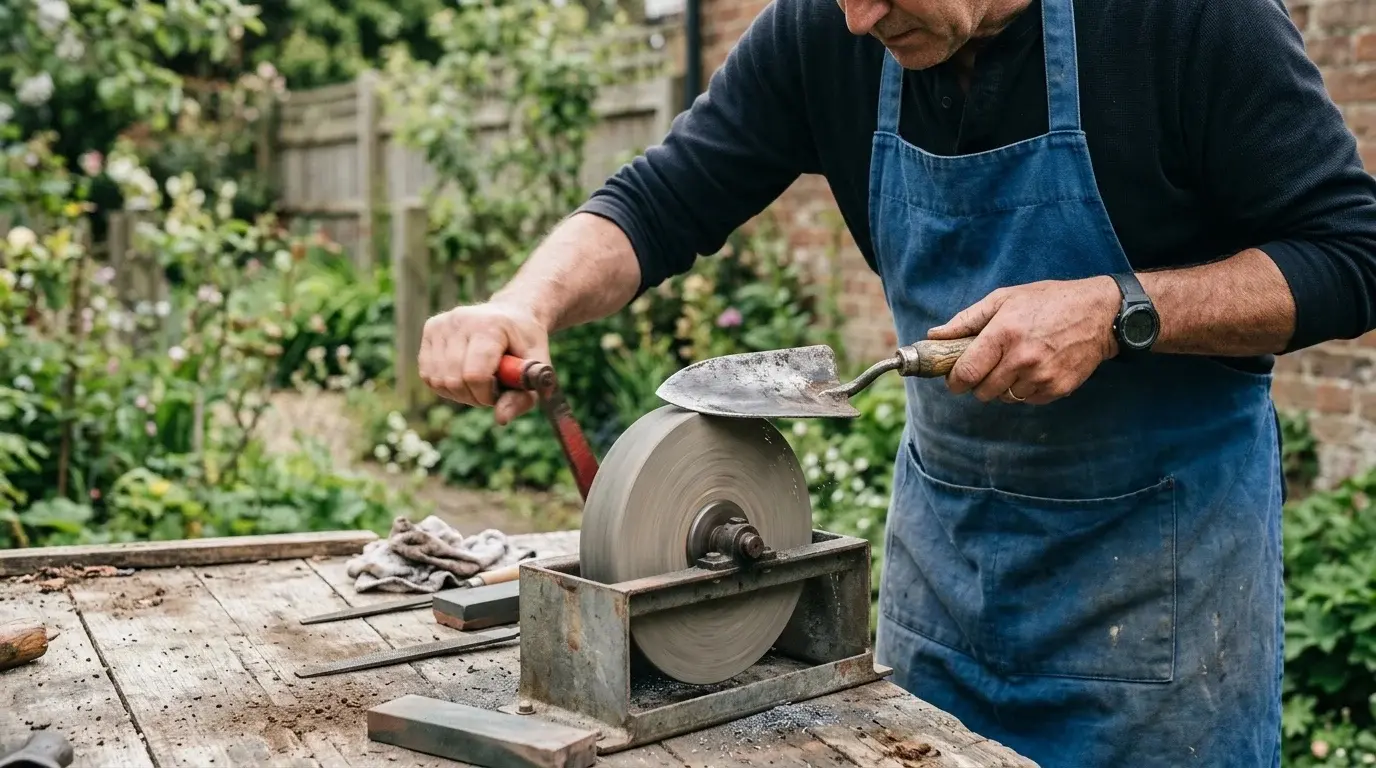
Bench grinders are the industry standard for high-volume material removal, though traditional 3,450 RPM models pose a high risk of overheating high-carbon steel. Slow-speed bench grinders operating at 1,725 RPM are vastly preferred for tool maintenance. Belt sanders, particularly 1x30-inch or 2x72-inch models, offer superior versatility and cooler operation; the extended length of the abrasive belt allows heat to dissipate before returning to the contact wheel.
For field repairs and mid-shift touch-ups, manual tools such as bastard files, pucks, and diamond plates remain indispensable. These allow operators to restore edges without electrical power, though they are highly labor-intensive, removing material at a rate of less than 0.1mm per minute compared to mechanized solutions.
Abrasive Selection, Heat Control, and Edge Geometry
Thermal management is the most critical variable in mechanized grinding. If tool steel exceeds approximately 200°C to 300°C (392°F to 572°F), the temper is drawn out. This softens the steel and leaves a visible blue or straw-colored oxidation mark. Once the temper is lost, the edge will no longer hold its sharpness under operational stress.
To mitigate this, operators increasingly rely on friable aluminum oxide wheels, which shed dull abrasive particles to expose sharp new edges, thereby reducing friction. Cubic Boron Nitride (CBN) wheels, while carrying a higher initial cost, are gaining immense traction for garden tool grinding. CBN wheels do not require dressing, maintain their exact diameter, and generate significantly less heat than traditional vitrified wheels, ensuring the edge geometry remains intact down to a tolerance of 0.05mm.
Step-by-Step Garden Tool Grinding Process
Establishing a standardized procedural workflow guarantees consistent edge geometry and safeguards operator well-being. A rigorous protocol prevents the accidental destruction of expensive horticultural equipment and ensures maximum cutting efficacy once the tools are returned to the field.
Inspect, Clean, Clamp, Grind, and Cool
The process begins with a thorough visual and tactile inspection under adequate lighting. Any blade exhibiting stress fractures deeper than 2mm should be retired immediately to prevent catastrophic failure and shrapnel hazards during operation. Next, chemical solvents or brass wire brushes strip hardened sap, resin, and rust, which would otherwise melt and glaze the grinding wheel.
The tool must then be secured using appropriate jigs or tool rests to maintain the target angle—freehand grinding introduces angular deviations that compromise cutting efficiency. During the grinding passes, only light pressure should be applied. To manage core temperatures, the steel must be quenched in ambient water every 3 to 5 seconds, ensuring the substrate remains strictly below the critical 150°C threshold where microscopic structural weakening begins.
Safety Checks and Routine Maintenance
Routine maintenance of the grinding equipment is both legally mandated and operationally necessary. Vitrified wheels must be trued and dressed regularly using a diamond dresser to remove embedded metal particles, expose fresh abrasive, and restore perfect concentricity.
From a compliance standpoint, operations must adhere to global safety directives, such as those outlined by ISO standards regarding abrasive wheel machinery. Operators are required to wear ANSI Z87.1 (or equivalent) impact-resistant eye protection and use localized exhaust ventilation (LEV) systems to capture airborne particulate matter. Inhaling aerosolized metal and abrasive dust poses severe respiratory hazards, necessitating HEPA-filtered extraction operating at a minimum capture velocity of 100 feet per minute.
Choosing In-House vs Outsourced Grinding
Facility managers must continually weigh the economics of executing tool maintenance internally versus contracting specialized third-party sharpening services. This logistical decision hinges on fleet size, labor availability, compliance burdens, and seasonal operational tempos.
Cost, Labor, Quality Control, and Compliance
Capital expenditure (CapEx) for a professional in-house grinding station—including slow-speed grinders, CBN wheels, precision jigs, and safety extraction—typically ranges from $800 to $3,500. Conversely, outsourcing the grinding of commercial mower blades or hedge trimmers costs approximately $8 to $15 per unit, entirely shifting the burden to operational expenditure (OpEx) but introducing logistical downtime.
| Metric | In-House Grinding | Outsourced Grinding |
|---|---|---|
| Initial Capital Cost | $800 - $3,500 | $0 (OpEx driven) |
| Turnaround Time | Immediate (15-30 mins) | 3 to 7 business days |
| Cost Per Blade (Long-term) | $1.50 - $3.00 (Labor + Wear) | $8.00 - $15.00 |
| Quality Control | Dependent on staff training | Guaranteed by vendor SLA |
For a landscaping firm operating a fleet of 20 mowers that require blade changes twice weekly, the break-even point for in-house equipment is often reached within the first 45 to 60 days of the peak season. However, outsourcing entirely mitigates the liability of occupational safety compliance and eliminates the need for specialized staff training.
Seasonal Grinding Schedule for Grounds Teams
Effective maintenance requires a structured seasonal schedule tailored to equipment usage rates. During peak growth months, high-friction equipment like commercial rotary mowers demands blade sharpening every 10 to 15 operating hours to maintain fuel efficiency and turf health. Manual tools such as loppers and shears may only require comprehensive grinding every 30 to 60 days, provided they receive daily honing in the field.
The winter dormant season provides grounds teams with the optimal window to execute deep maintenance. During this period, all inventory should undergo full edge reprofiling, rust mitigation, and hardware torque verification. Implementing a strict off-season grinding schedule ensures the entire fleet is operating at 100% mechanical efficiency prior to the spring operational surge.
Key Takeaways
- Properly ground pruning shears, loppers, and mower blades can reduce cutting force by 30% to 40% compared with dull edges.
- Use coarse 36- to 80-grit abrasives for rough bevel restoration, then hone with 220- to 1000-grit abrasives to refine the cutting edge.
- Remove burrs after grinding with stropping, buffing, or fine ceramic rods to prevent weak wire edges from breaking during use.
- Schedule grinding more frequently in sandy, damp environments because mower blades can lose up to 0.5 mm of edge profile in a 40-hour work week.
- Maintain clean cutting edges to reduce plant tissue damage and lower the risk of disease transmission in orchards, vineyards, and landscaped sites.
- Match the edge profile to the tool’s job, since flat, hollow, and convex grinds offer different balances of sharpness, durability, and impact resistance.
Frequently Asked Questions
How often should garden tools be ground?
Frequency depends on soil, moisture, and workload. In sandy or damp commercial conditions, mower blades and cutting tools may need scheduled grinding weekly, as a blade can lose up to 0.5 mm of edge profile over a 40-hour work week.
Why is grinding better than simply sharpening by hand?
Grinding restores the primary bevel, removes nicks, and corrects edge geometry. Hand sharpening is useful for touch-ups, but it may not repair rolled edges, heavy wear, or improper profiles caused by soil abrasion and outdoor corrosion.
What grit should be used for garden tool grinding?
Heavy restoration typically starts with 36- to 80-grit abrasives to reshape the bevel. Honing then uses finer abrasives, often 220 to 1000 grit, to refine the edge, reduce friction, and prepare the tool for clean cutting.
Can dull garden tools affect plant health?
Yes. Dull tools crush or tear plant tissue, creating larger wound surfaces where pathogens can enter. In orchards and vineyards, poorly maintained cutting edges can increase vascular disease transmission by an estimated 15% to 25%.
What outdoor conditions dull garden tools fastest?
Sandy soil, damp conditions, acidic plant sap, and repeated contact with dirt accelerate wear. Silica in soil has a Mohs hardness of 7, which can quickly abrade garden tools hardened around 52 to 58 HRC.